A Genuine Question
This isn't a moan. It's not a gripe. It's a question — and an honest one.
It's about what we wear, when we wear it, and why we wear it. Not the obvious stuff — nobody's questioning fire kit on the fireground. The question is about everywhere else.
We want to open that conversation up properly. We want to hear from you — about whether the uniform and PPE we reach for in 2026 is genuinely fit for purpose, or whether some of it has just become habit.
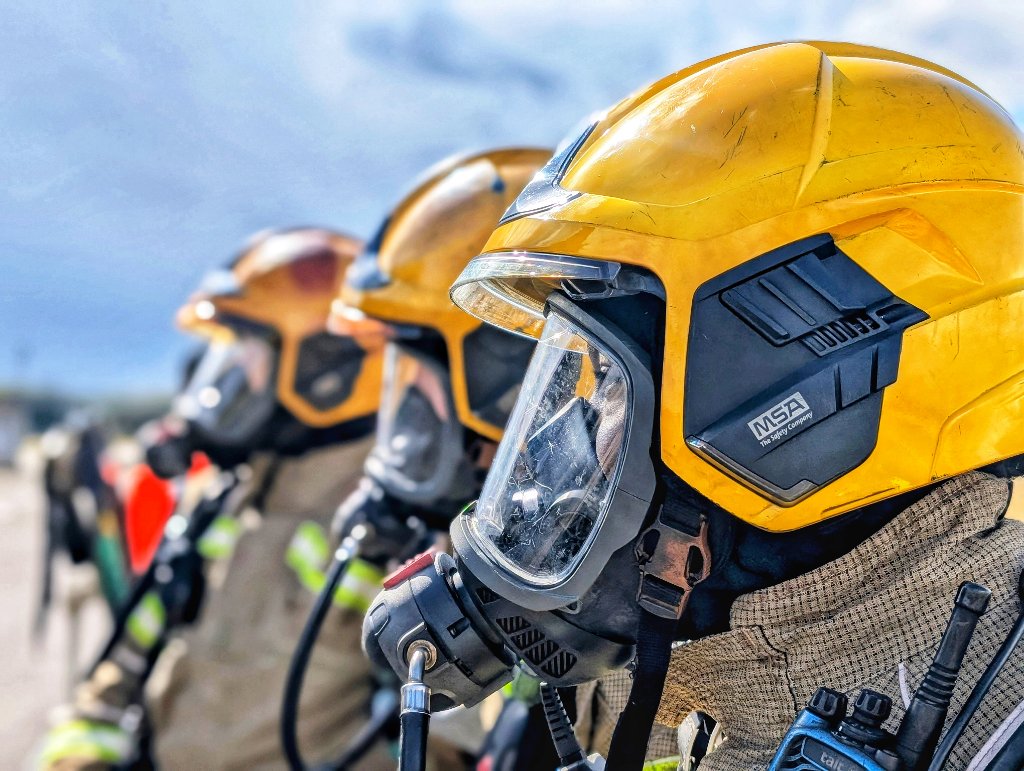
PPE as Uniform?
Here's where it gets interesting.
A plumber doesn't turn up to a burst pipe in a full fireproof suit. Yet firefighters attending domestic flooding incidents routinely arrive in full PPE — fire kit, helmet, the lot.
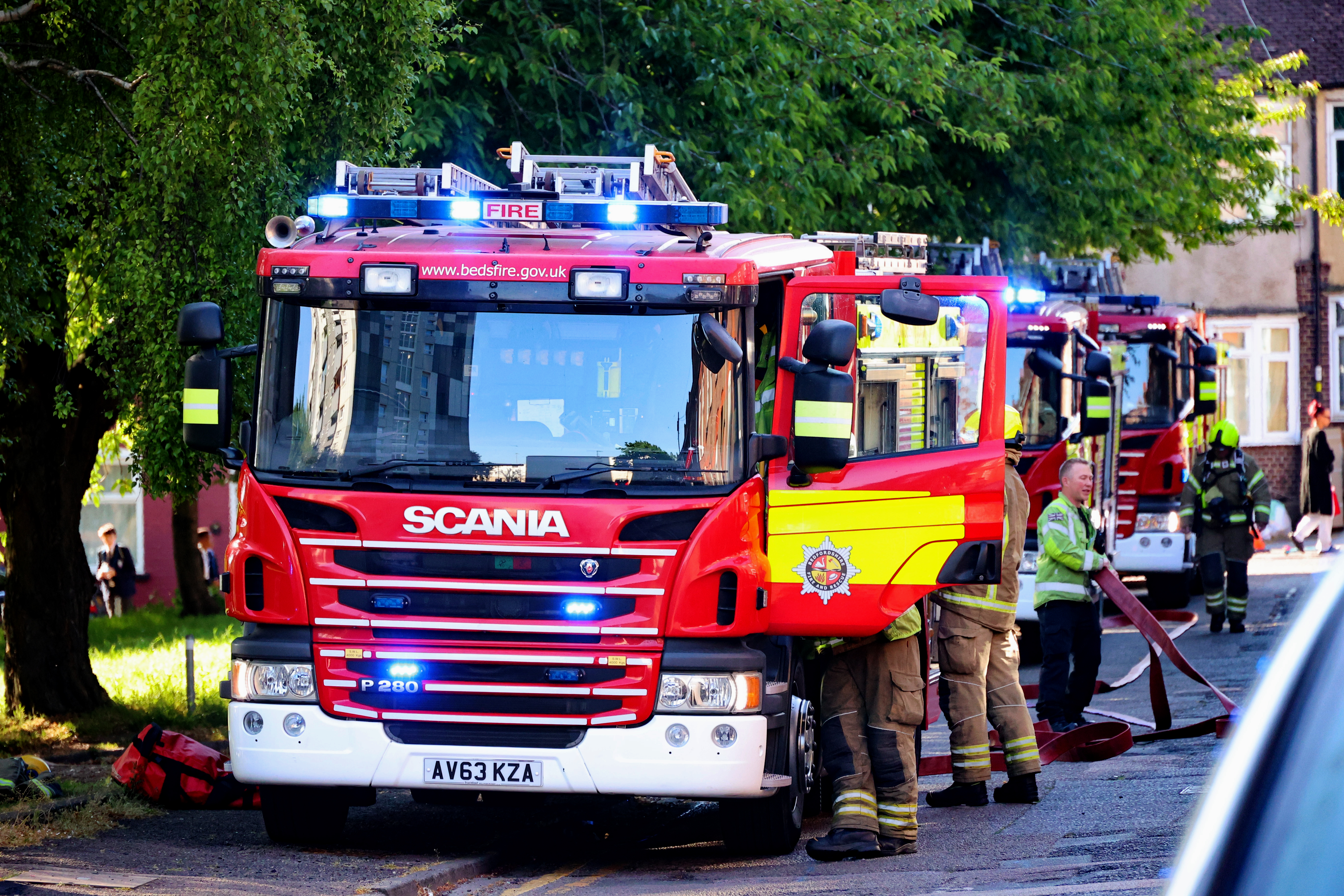
Shut-in lift incidents are another one. Fully rigged. Helmet on. Tunic done up. Because the tradition says we should "turn up smart" — and rigging has, for many services, become the definition of looking the part.
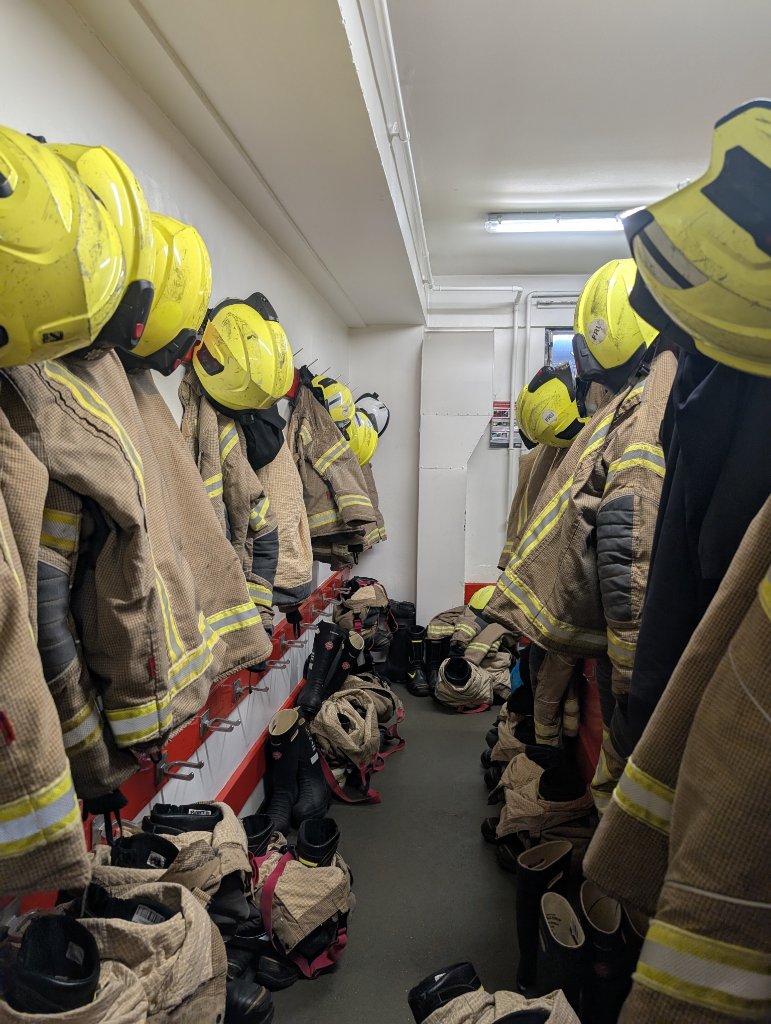
But is it smart? Is it safe? Or is it just what we've always done?
In an era where contaminant awareness is finally getting the attention it deserves, there's a genuine question about whether wearing full structural PPE to incidents where there is no fire is actually exposing firefighters to more contamination risk, not less.
Do the Public Actually Care?
This is the part that's hardest to gauge.
In searing summer heat, firefighters are still turning out in full kit with helmets on and tunics done up — because that's how it's always been done. But ask yourself: when you turn up to a person trapped in a lift, or a flooded kitchen, does the member of the public care whether your helmet is on your head and your chin strap done up? Do they even notice?
Or do they just want help, quickly, from someone who looks competent and calm?
We genuinely don't know the answer to this. That's why we're asking.
Shorts in the Summer — Could It Happen Here?
Across the Atlantic, the FDNY and other US departments have long allowed shorts as part of summer workwear. It's practical. It's comfortable. It keeps crews operating in extreme heat safer from heat illness.
So why not here?
Is it a image thing? A tradition thing? A health-and-safety thing that's never actually been properly reviewed? Or is it simply that nobody's asked the question loudly enough?
We're not advocating for anything. We're asking whether the conversation is worth having — openly, and with input from the people who actually wear the kit.
What Do You Think?
This is where you come in.
We want this to be a genuine fact-finding mission. Not a petition, not a campaign — just an honest collection of what firefighters across the UK actually think about their modern uniform and how PPE is used day-to-day.
Some things to consider in the comments:
Do you feel expected to wear full PPE at incidents where it isn't strictly necessary?
Has your service got clear guidance on when PPE is and isn't required — or is it just left to "tradition"?
What's your honest view on contaminants and over-wearing fire kit?
Would you support a reviewed summer workwear policy — shorts included?
Do you think the public notice or care how we're dressed at non-fire incidents?
Be honest. Be respectful. And if you've got a different view to the one implied here, we want to hear it — that's the whole point.
There's a poll below — please vote — and then have your say in the comments. We'll be reading every single one.




Comments (6)
As NFCC lead for PPE I'm pleased to say that as part of the new National FF PPE framework we are offering lightweight/hybrid PPE to compliment our structural PPE. This new PPE is based on wildland and technical rescue standards as well as compliant to high visibility requirements. Feel free to get in touch for more details 👍
A proper kit assessment should be carried out to determine if the existing kit suits all of the tasks a fire fighter attends. If the fire fighter is required to wear full kit then the management should be wearing it.
I did my dissertation on this very subject. During my research I found firefighters were falling ill during the summer months because of the many layers that structural fire kit has. With the service moving rapidly alternative PPE better suited to different incidents should be seriously looked into.
In my service, particularly my watch, we seem to wear PPE to everything, floodings, shut in lifts, medical incidents. Our appliances have no air conditioning, we swelter on the machine, our dormitory has no air con, we swelter at work - then we are racing around wearing PPE for non fire emergencies, including helmet, because our 25 year serving watch commander says so.
We roll call in full fire gear, including lid both day shifts and both night (while none of the other watches on station do). I get that our gear should be clean, but helmets are notoriously difficult to clean properly. All while our officers parade in front of us in nothing but workwear.
There has to be a point where these pointless, antiquated traditions are erased. I'd have no problem parading in my uniform, with polished workwear shoes, and my gear stacked in front of it. I tried to raise it at the mess table, and got the usual "cos standards" response, and then told "I haven't done 5 minutes anyway" TYPICAL!
✊✊✊
Structural Firefighting PPE has a finite capacity to absorb heat; the longer you wear it, the more heat it absorbs, the warmer you become and the faster you begin to sweat.
This places a stress on the body.
When combined it means both your PPE and you, will be less effective when genuinely need performance.
That drop in performance will inevitably shorten your effective working duration in a compartment wear, which is why we should delay getting dressed if ambient temperatures are already on the higher end.
You dont want to be in an overheated state before you even get rigged. Its not going to end well.
Hydrate en route, keep the tunic and flash hood off and keep the window down. Get dressed as you’re on the final approach to an incident. This should be the standard approach but for some reason its still frowned upon.
We need to start putting common sense and logoc before pointless fire service traditions or customs/practices.
That's why I'm researching it. I'm looking to lower the temperature for firefighters in the daily operations. This with support of the Fleur Lombard Bursary.