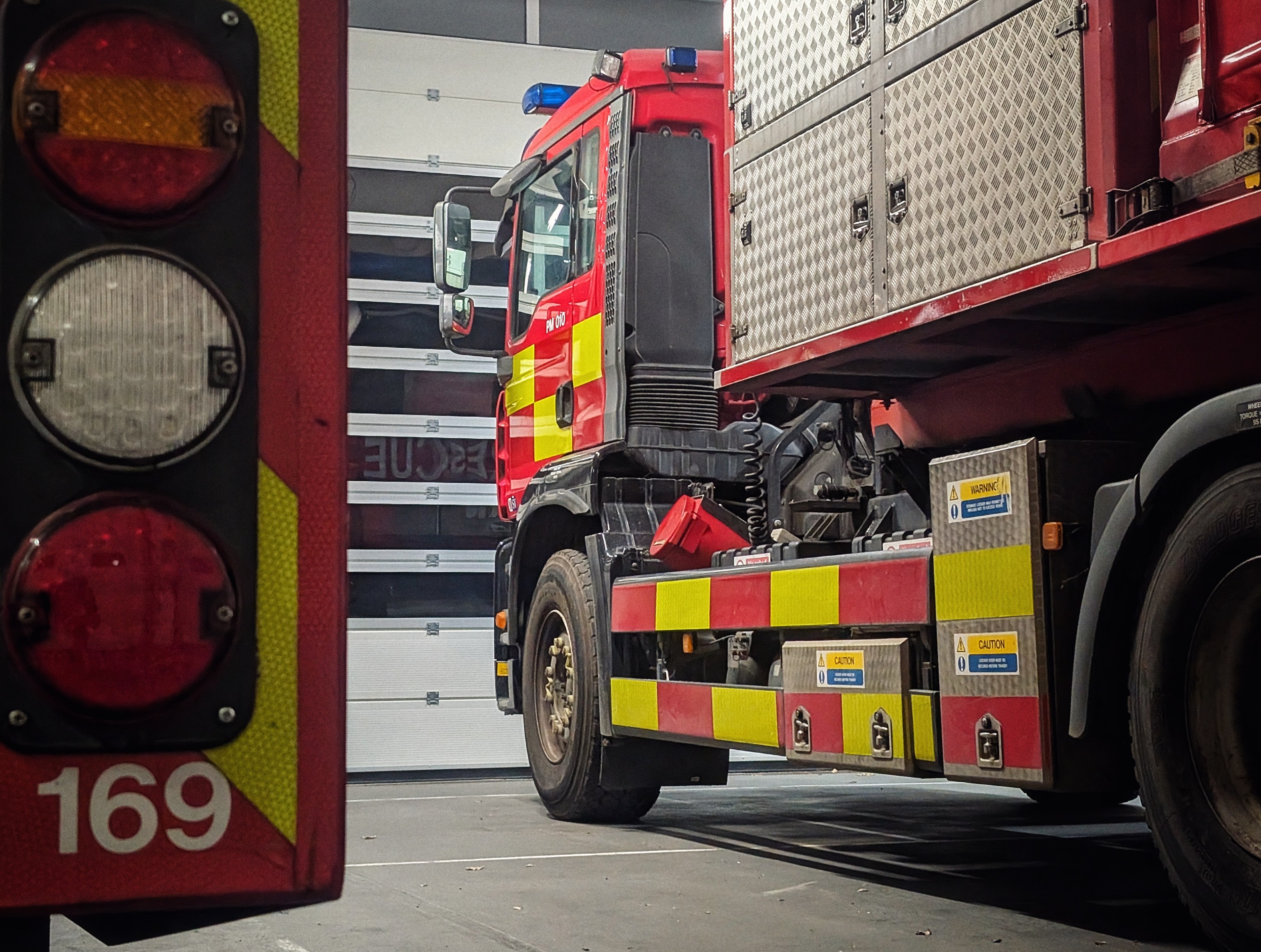
The government has confirmed that procurement is now underway to replace the bulk of the national-resilience high-volume pump (HVP) fleet, with a delivery schedule to be established once that process is complete.
The update came in a written parliamentary answer on 15 October, responding to a question from Huntingdon MP Ben Obese-Jecty about replacement vehicles and equipment for Cambridgeshire Fire and Rescue Service. Minister Florence Eshalomi said the department and the National Resilience lead authority were undertaking procurement for "the replacement of the bulk of the HVP fleet". Once that work is complete, they will establish a rollout schedule with national-resilience leads and the sector. Cambridgeshire is confirmed to receive replacement vehicles and equipment, but the answer gives no delivery dates.
What is a high-volume pump?
High-volume pumps are specialist appliances designed to move large quantities of water quickly. Unlike a standard fire engine pump, which typically delivers around 1,500 to 2,000 litres per minute, an HVP can shift significantly more. In practice, national-resilience HVPs generally operate in the region of 6,000 to 8,000 litres per minute, with around 8,000 litres per minute representing the top end of their capacity. That makes them a critical national-resilience asset for two very different scenarios: supplying large volumes of water to firefighting operations where hydrant supply is inadequate, and removing floodwater from communities during major flooding events.
The capability was brought into sharp focus during the 2007 summer floods, when fire and rescue services across England faced overwhelming demand for pumping capacity. The original New Dimensions programme, launched in the wake of those floods, created a national fleet of HVPs and associated equipment so that resources could be deployed wherever they were needed, regardless of which service owned them.
How the fleet works in practice
The national HVP fleet is not owned by individual fire and rescue services. Instead, it is a shared national-resilience resource, coordinated through a lead authority and deployed to incidents around the country as required. Individual services host and operate the equipment, with trained crews who can be mobilised at short notice.
Cambridgeshire Fire and Rescue Service is one such host. Its current HVP is based at Cambourne, with firefighters from both Cambourne and Gamlingay trained to operate it. According to the service's Community Risk Management Plan, the appliance has a pumping capacity of 7,000 litres per minute, supported by three kilometres of high-capacity hose and a dedicated hose-laying unit. That hose-laying capability is essential: an HVP is only useful if it can move water from a source, such as a river or reservoir, to where it is needed, sometimes over a significant distance.
The current fleet has been in service for a number of years, and like any operational appliance, components age, technology moves on, and maintenance costs rise. Replacement is a question of when, not if.
New Dimensions 2: a £97 million programme
The replacement sits within New Dimensions 2, a £97 million programme to renew and upgrade the national-resilience assets used by fire and rescue services at the largest and most complex incidents. That funding covers the wider programme, which includes a range of specialist capabilities beyond HVPs alone, rather than just the pump fleet.
Associated equipment is also part of the refresh. Merseyside Fire and Rescue Authority's March 2026 committee papers included a separate New Dimensions 2 procurement report for HVP hose, indicating that the programme covers not just the vehicles themselves but the supporting infrastructure that makes them operational.
What does procurement actually mean?
When the government says procurement is underway, it means the process of selecting a supplier or suppliers to manufacture and deliver the replacement vehicles has begun, but has not yet concluded. This is an important distinction. Procurement underway is not the same as a confirmed contract award, completed manufacture, or a scheduled delivery date.
The process typically involves several stages: defining the technical specification, issuing a tender or competition, evaluating bids, awarding a contract, and then moving into manufacture and delivery. Each of those stages takes time, and the current answer does not specify where in that process things currently stand.
What we know and what we don't
What the parliamentary answer confirms:
Procurement is underway to replace the bulk of the HVP fleet.
A delivery schedule will be established once procurement is complete.
Cambridgeshire will receive replacement vehicles and equipment.
The work is part of the wider £97 million New Dimensions 2 programme.
What it does not tell us:
How many pumps will be purchased.
Who will supply them.
What technical specifications or improvements the new vehicles will offer.
When deliveries will begin.
Whether every HVP in the national fleet will be replaced, or only some.
The answer refers to the "bulk" of the fleet, not every HVP in the UK. That wording leaves open the possibility that some existing appliances may continue in service alongside the new ones, or that not every host service will receive a replacement.
Why this matters
For serving firefighters, the replacement of the HVP fleet is about more than new vehicles. It is about the reliability and capability of equipment that can be called upon at the most demanding incidents. An ageing fleet means more downtime for maintenance, a higher risk of equipment being unavailable when needed, and potentially less efficient performance compared to what modern alternatives can offer.
For the public, HVPs are one of the most visible demonstrations of national resilience in action. When floods hit, these vehicles are often on the ground, working around the clock to protect homes and businesses. A refreshed fleet means that capability remains ready for whatever comes next.
What happens next?
The next milestones to watch for are the conclusion of the procurement process and the publication of a delivery schedule. Until then, the existing fleet continues in service, maintained and operated by host services around the country.
We will keep an eye on further announcements and provide updates as more details emerge.






Comments
No comments yet — be the first!