On 14 August 2026, millions of people across England and Wales heard an unfamiliar sound from their phones. The UK Government's Emergency Alert system — previously used only for a small number of flood and severe weather events — was activated nationally to warn of very high wildfire risk and urge the public to avoid any activities that could start a fire. It was a significant moment. Not because the technology was new, but because of what it signalled about the scale of pressure being placed on fire and rescue services at that point in the summer.
By then, services across the country had already been managing a relentless operational tempo. A major incident had been declared at Dunwich Heath in Suffolk on 29 July, with dozens of firefighters deployed to what was described as a large and complex wildfire. In Wales, the situation was serious enough for the Government to authorise military support — around 100 Army personnel deployed immediately, with a further 100 due that same evening. London Fire Brigade was recording nearly 28,000 emergency calls and more than 13,000 incidents during July alone, which City Hall described as one of LFB's busiest Julys on record.
This was not a localised problem. It was a national one.
Wildfire Is No Longer a Fringe Risk
For most of its history, the UK fire service has treated large-scale vegetation fires as a peripheral operational concern — something that might stretch a rural service for a day or two in a dry April, before the weather broke. That assumption has been under pressure for years. The summer of 2026 has put it under something closer to sustained assault.
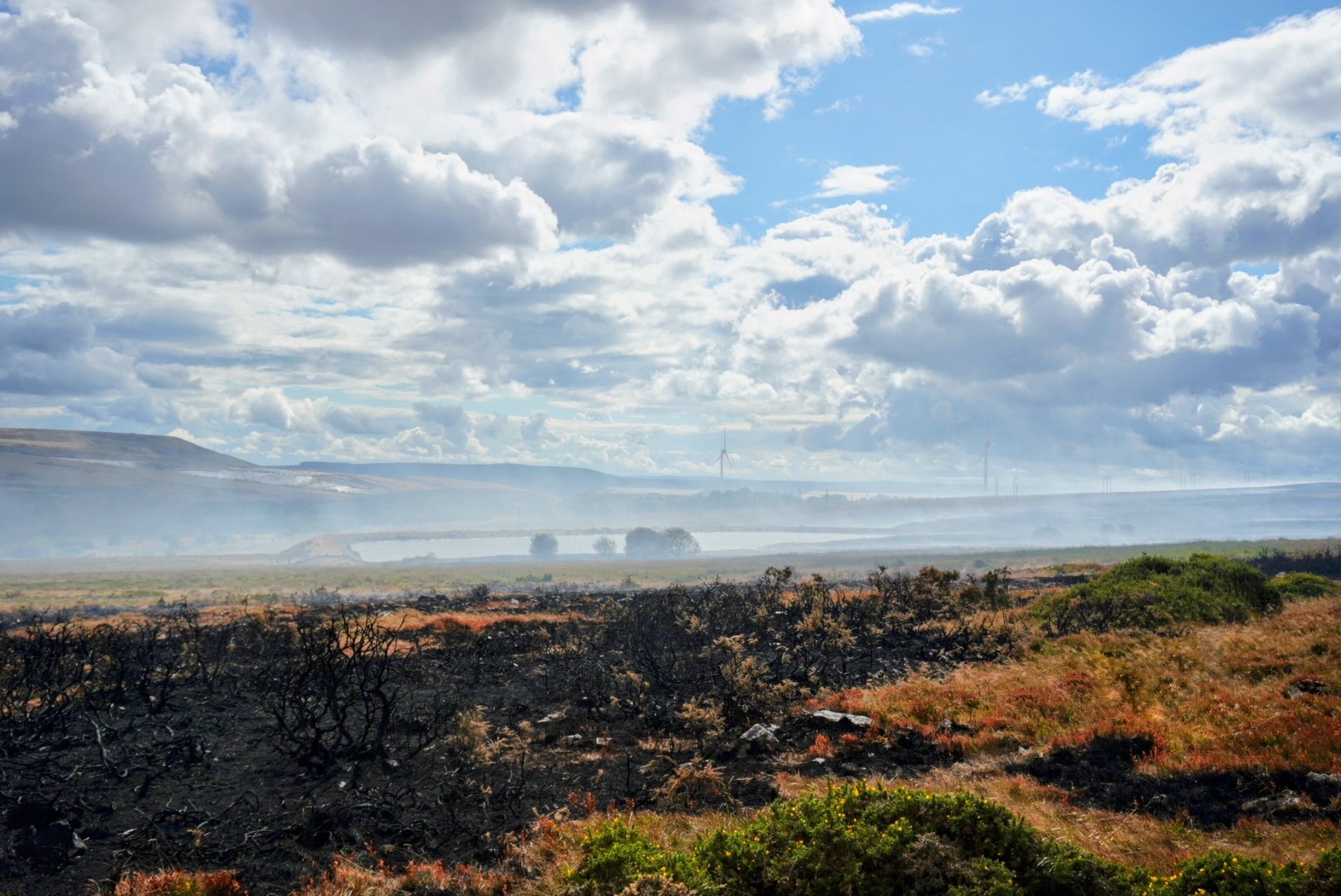
The conditions driving this are well understood. Prolonged dry periods, high temperatures and parched upland vegetation create fire behaviour that UK services have not historically had to manage at scale. Moorland, heath, peat and grassland can carry fire quickly across large areas, generating smoke columns visible for miles, radiant heat that prevents close approach, and underground peat combustion that smoulders for days after the surface is apparently extinguished.
It would be a simplification to attribute every individual fire directly to longer-term climate trends. Weather is variable, and drought conditions occur naturally. What changes with a warmer baseline, however, is the frequency with which those conditions align — and the severity of what happens when they do. The question for fire and rescue services is not whether the science is settled, but whether operational planning is keeping pace with what they are actually being asked to attend.
What Firefighters Are Being Asked to Do
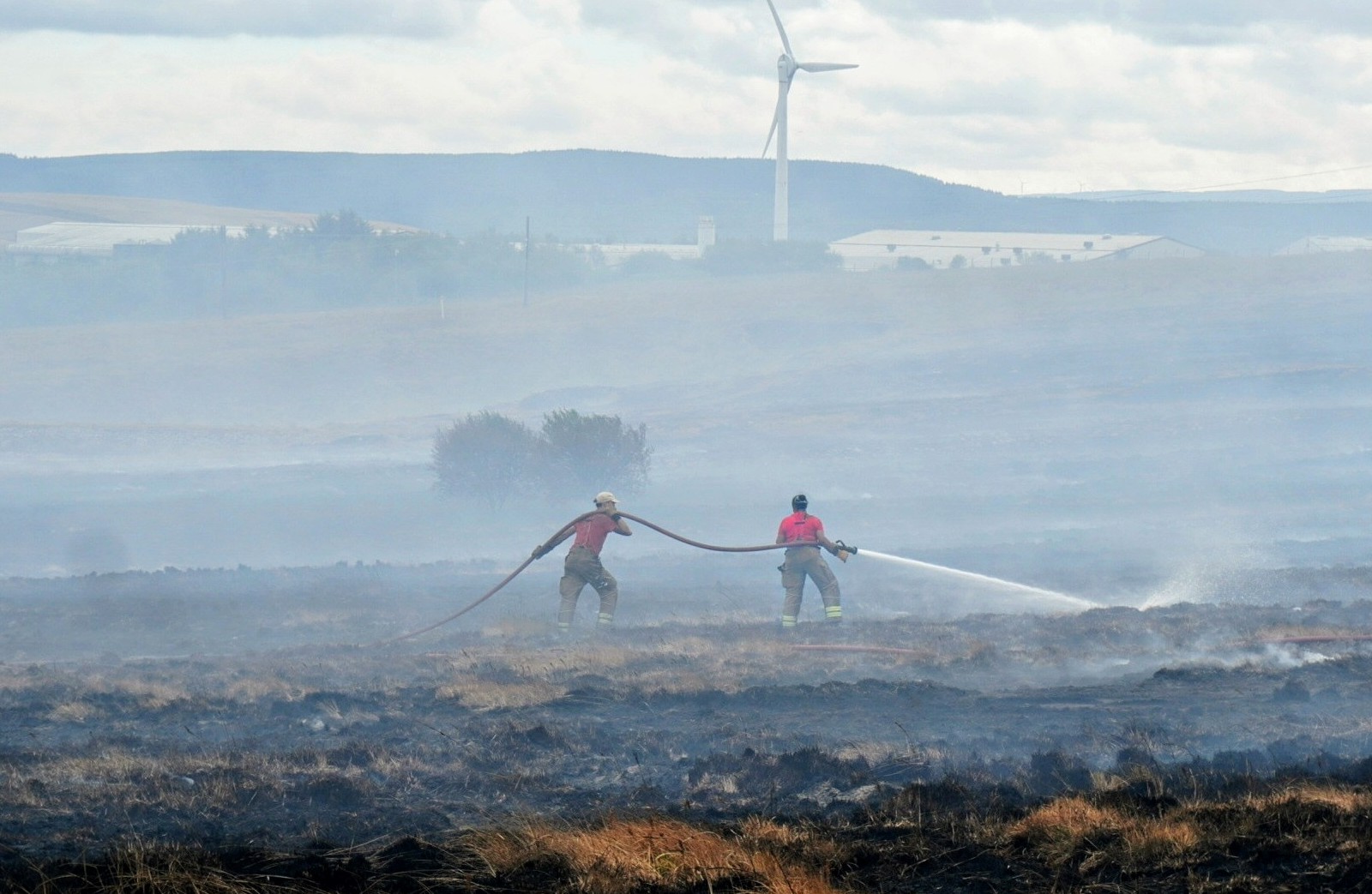
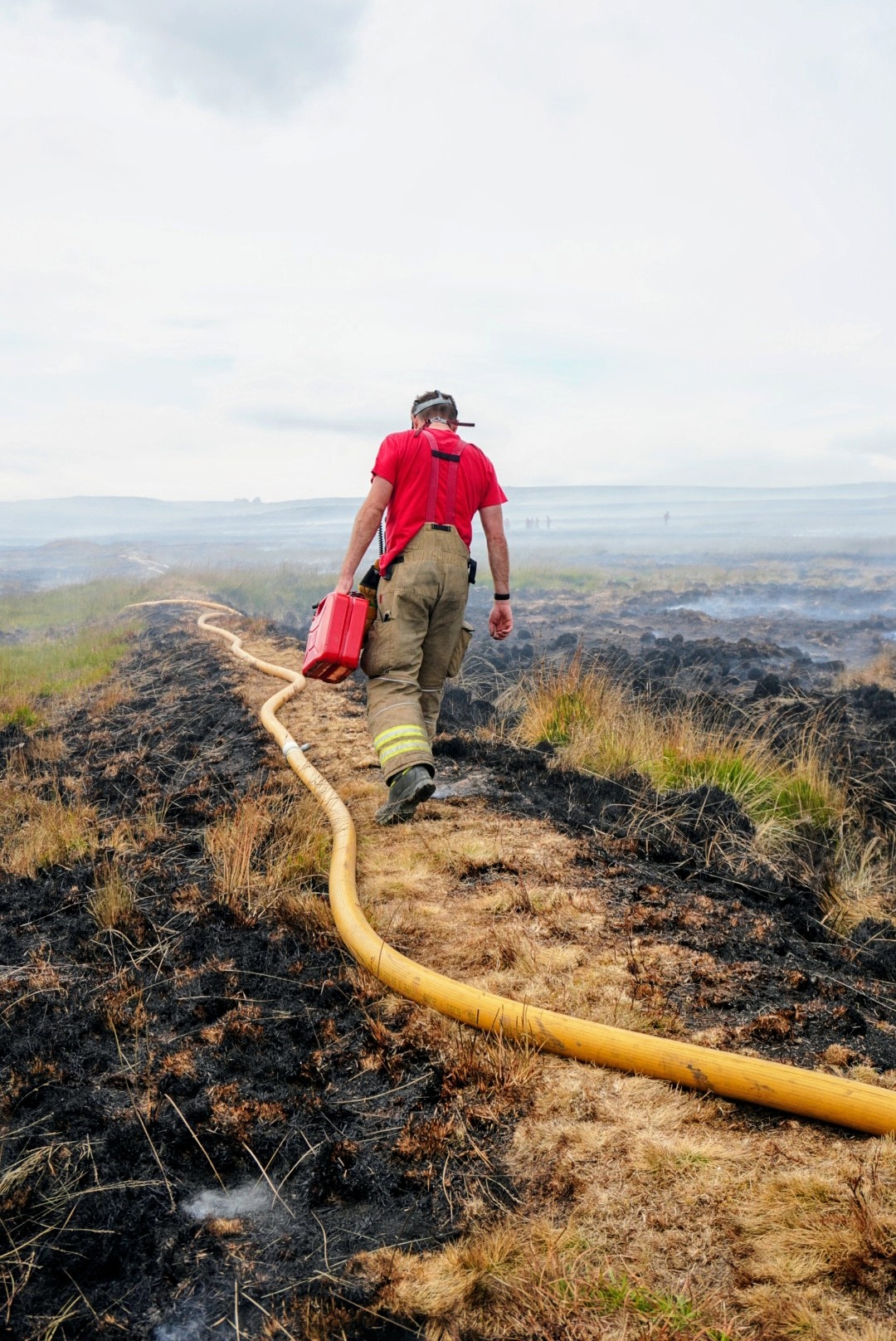
Wildfire firefighting is physically and operationally different from structural firefighting in ways that are not always visible to those outside the service. Incidents can run for hours or days. Terrain is often inaccessible to standard appliances, requiring crews to carry equipment on foot across rough ground in full kit, in high ambient temperatures, in heavy smoke. Water supplies are sparse or absent. Hose runs can extend hundreds of metres. Relief crews may take significant time to reach forward positions.
Welfare is a genuine operational concern. Heat stress and smoke inhalation are cumulative. Contamination from combustion products — particularly on peat and heath fires — is a known long-term health risk that the service has been grappling with in structural firefighting, and which applies equally in the wildfire context. Managing crew welfare across a multi-day incident, maintaining safe working rhythms and ensuring adequate rehabilitation are tasks that require planning, resources and specialist understanding.
The events of this summer have also placed unusual demand on national resilience mechanisms, with services supporting each other across county and national boundaries. That mutual aid model works — but it depends on the services providing support not being simultaneously overwhelmed at home.
Equipment and Training: A Postcode Lottery?
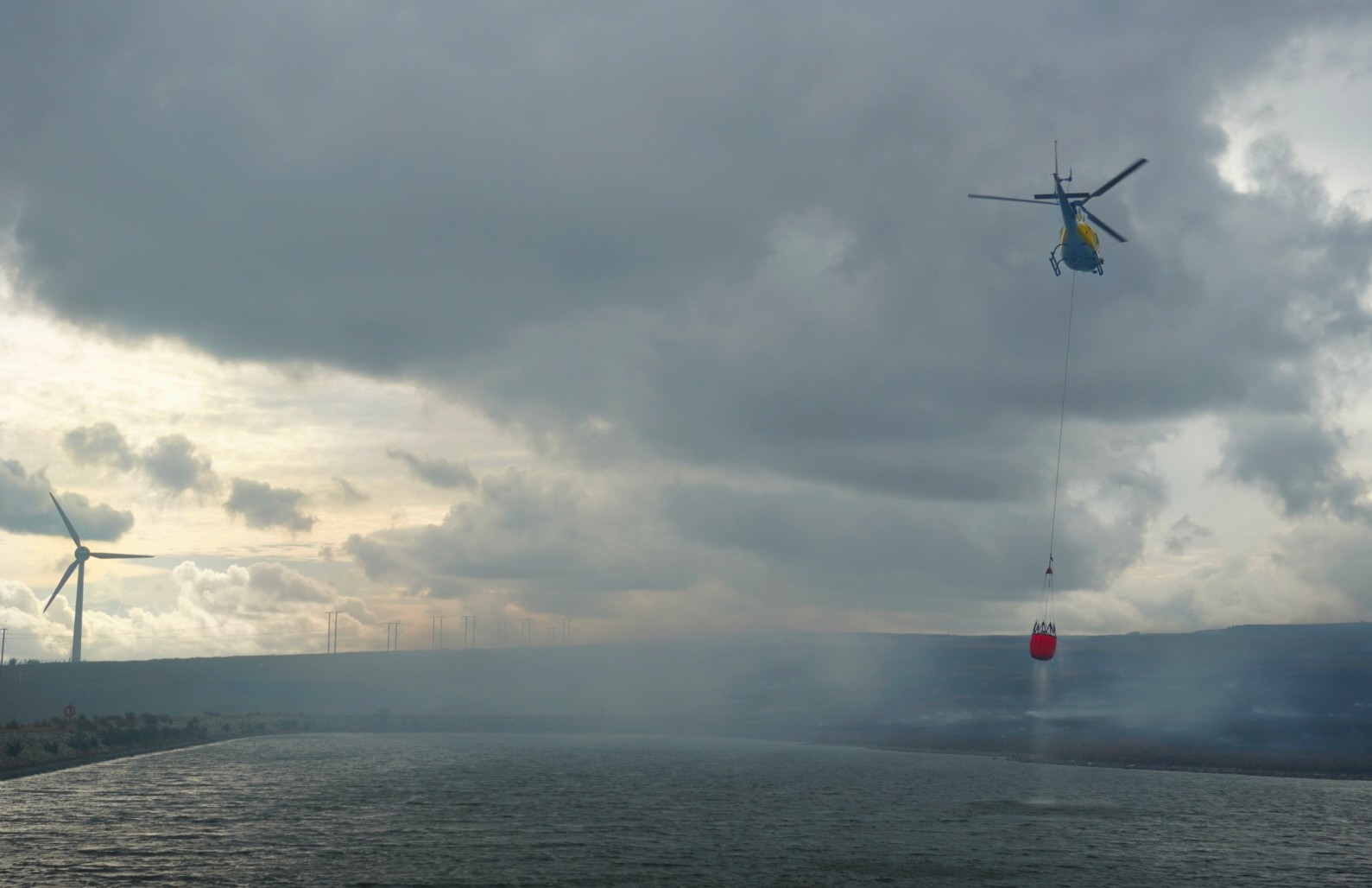
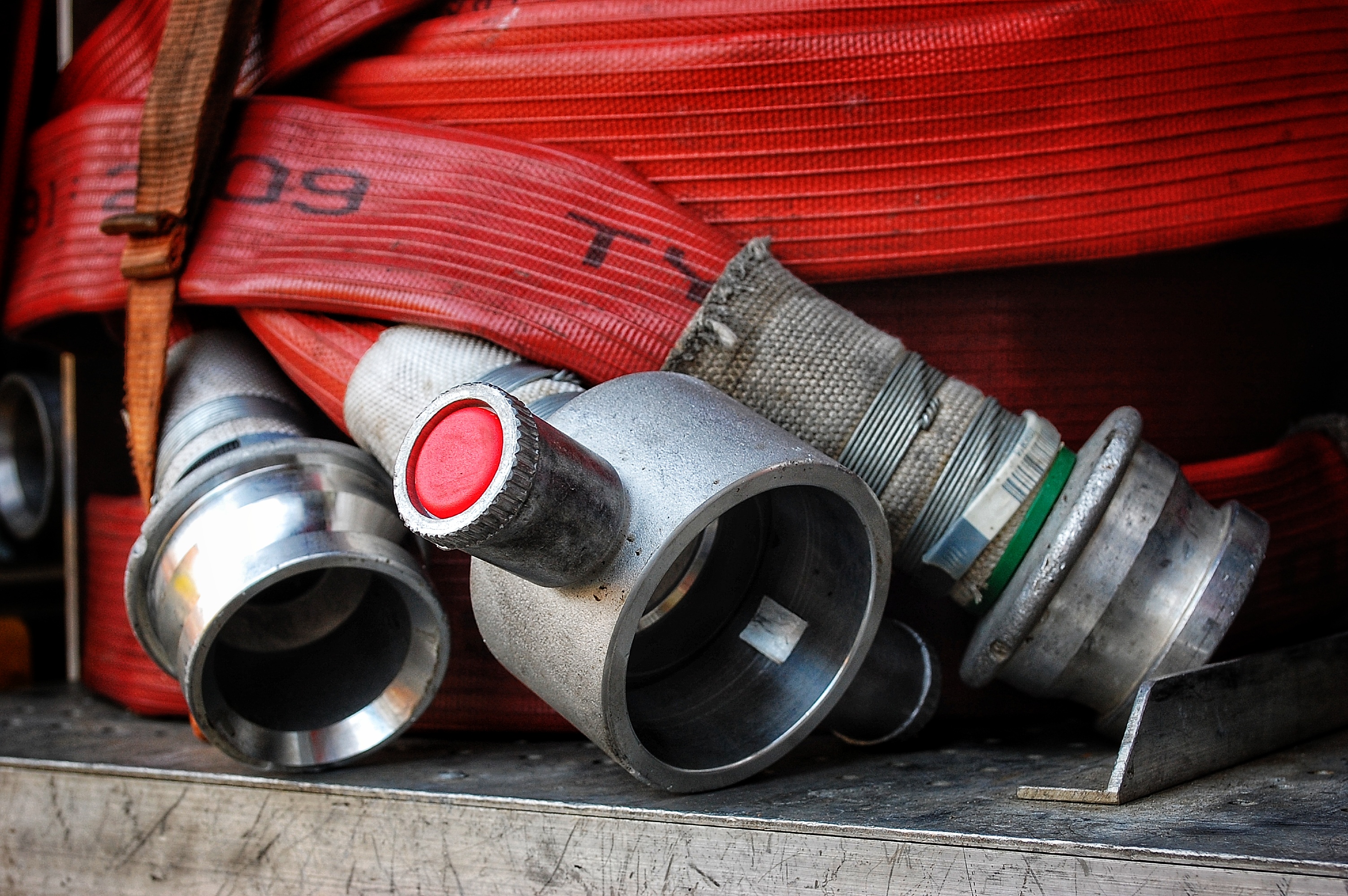
The honest answer to the question of whether UK fire and rescue services are consistently equipped for wildfire is: it varies. Some services — particularly those covering upland, moorland or heath environments — have invested significantly in off-road capability, wildfire-specific PPE, beaters, blowers, specialist hose and tactical training. Others, particularly urban services facing wildfire as a relatively new operational priority, may be working with kit and training originally designed for a different risk profile.
This is not a criticism of those services. Resource allocation follows assessed risk, and risk assessment takes time to shift. The more relevant question is whether the current pace of change across the service is fast enough. Interoperability — the ability of crews from different services to work together effectively on the same incident — requires not just compatible equipment but shared tactical understanding and training. On a major cross-border incident, those gaps can create real operational friction.
Drones have become an increasingly important part of the wildfire toolkit, providing aerial observation and fire behaviour intelligence that crews on the ground cannot obtain. Their use has expanded rapidly across several services, but integration into tactical command structures — and the training required to use them effectively under pressure — remains uneven.
Investment Is Coming
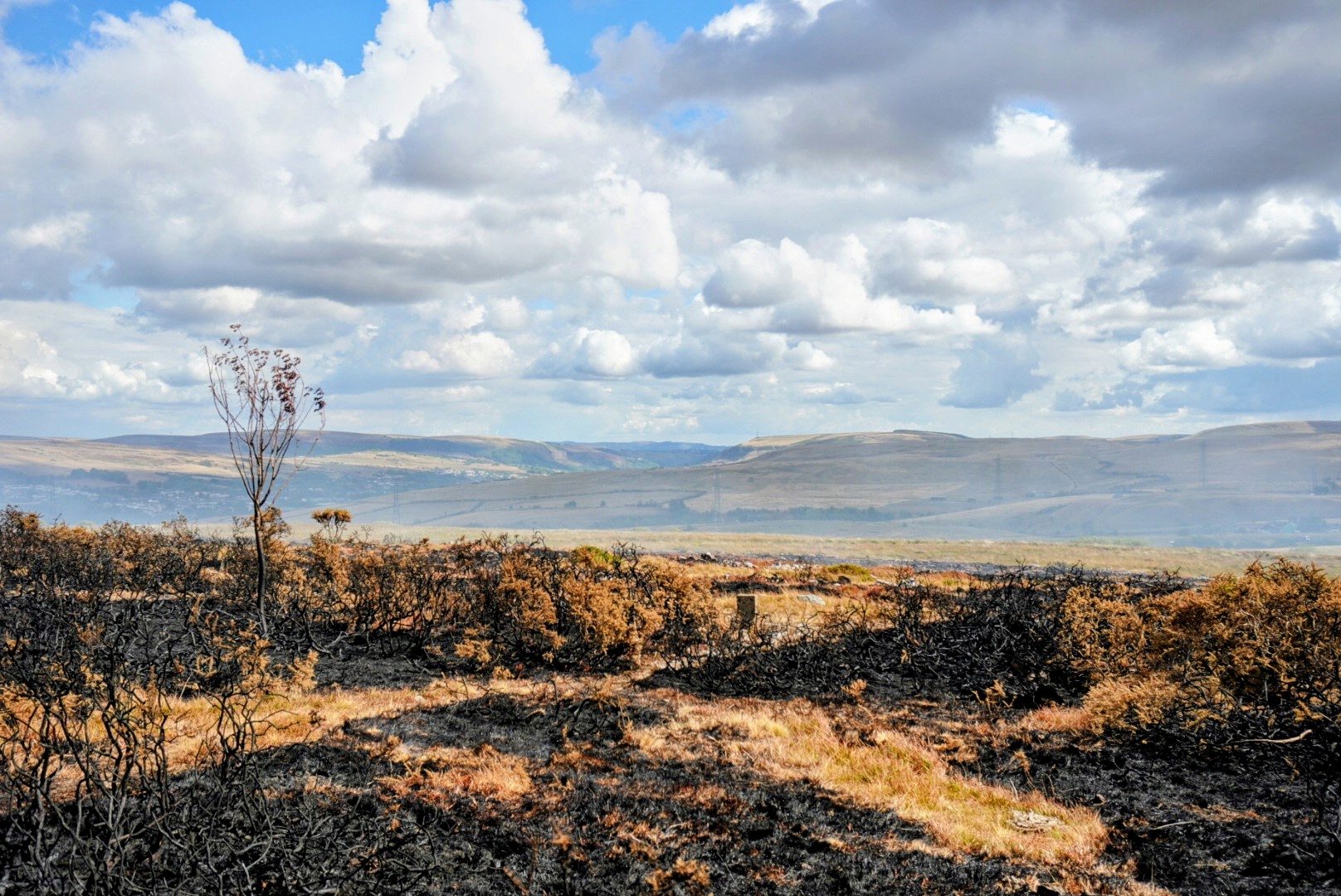
The Government's response to the 2026 season has included a number of concrete measures. In material published on 6 August, MHCLG described existing wildfire resilience investment of nearly £97 million as the biggest upgrade to national resilience in almost twenty years. That funding covers fire-service training and specialist equipment, off-road assets and the development and trialling of highly trained wildfire response teams. Emergency funding was also announced for services under the greatest operational pressure during the summer, alongside a commitment to convene a national wildfire summit later in 2026 — a forum that will matter depending on what it produces.
In London, the Mayor announced that LFB would receive £8.9 million in additional wildfire funding in 2026/27. That investment is earmarked for wildfire response vehicles, drones, specialist hoses and backpack blowers — a practical recognition that the capital's parks, heathland and surrounding areas present a wildfire risk that now demands dedicated resource.
These are not trivial sums, and they represent a meaningful shift in how the Government is framing the wildfire risk. The question worth asking, however, is what the baseline was before them — and whether the investment is proportionate to what services are now routinely being asked to manage.
Is Investment Catching Up or Getting Ahead?
There is a significant difference between investment that catches up with a risk that has already materialised, and investment that genuinely gets ahead of it. The honest assessment of where the UK fire service sits in 2026 is somewhere in the former category — responding to an elevated risk that has been building for several years, with funding and planning that is accelerating but is still working to close a gap rather than open a lead.
That is not a counsel of despair. It is a realistic description of where things stand, and it matters because it shapes what happens next. If the national wildfire summit treats the 2026 season as an exceptional event — something to be managed through emergency funding and then filed away until conditions recur — the opportunity it represents will be wasted. If it instead produces a durable national framework for wildfire capability, training standards, PPE requirements, fleet planning and welfare protocols, then the summer of 2026 will have served a purpose beyond the incidents themselves.
The variation in capability between services also needs to be addressed with transparency. It is not enough to know that some services are well prepared. If the risk is national — and the Emergency Alert, the military deployment and the multi-service mutual aid of this summer confirm that it is — then capability needs to meet a national standard. What that standard looks like, who sets it and how it is funded are questions the summit will need to answer with specificity.
What Should Happen Next
Several things need to happen, and they are not all complicated. A national minimum standard for wildfire capability — covering PPE, off-road access, water management, tactical training and crew welfare — would give every service a baseline to plan against and commissioners a framework for accountability. Better national data on incident frequency, duration, resource deployment and firefighter welfare would allow planning to be based on evidence rather than assumption.
Firefighter contamination protocols developed for structural firefighting need to be formally adapted for wildfire — smoke and combustion products from vegetation and peat carry carcinogens, and the exposure patterns in long-duration outdoor fires are different from those in enclosed structures. This is not a new concern in the sector, but it requires specific attention in the wildfire context.
Cross-border interoperability — between English, Welsh, Scottish and Northern Irish services — deserves practical investment in shared training and compatible kit, not just goodwill. The mutual aid that worked this summer worked because experienced people made it work under pressure. That should not be where the system's resilience runs out.
Finally, public prevention messaging has a role that tends to get overlooked in operational post-mortems. The Emergency Alert of 14 August was a blunt instrument deployed in exceptional circumstances. Sustained public education about wildfire risk — particularly around access land, moorland edges and dry grassland — is a cost-effective lever that sits outside the fire service but depends partly on it for credibility and content.
We Want to Hear From You
If you work in the fire service — as a wholetime or on-call firefighter, fire officer, or control room operator — we want to know what this summer looked like from the ground. What was your service asked to do? What worked? What didn't? What do you think needs to change?
Leave a comment below, keeping operational detail general. Your experiences will inform our follow-up coverage — including a feature based on poll results and reader responses. We're also building out our community for firefighters across the UK, so if you haven't already joined UK Firefighter Hub or subscribed to The Watch, we'd be glad to have you.
Do you think your Fire & Rescue Service is adequately equipped and trained for major wildfires?
172 votes cast · Results update every 5 minutes
This poll is completely anonymous. No personal data is collected or stored. Results are indicative only and are not affiliated with the FRU, FRSA, the National Employers, or any other body.
The Test That Matters
Wildfire is not a new risk. But the scale at which it is now presenting — nationally, simultaneously, for weeks at a time — means it can no longer be treated as an occasional seasonal anomaly to be handled through mutual aid and goodwill. The 2026 season has demonstrated, with considerable force, that this is a permanent feature of the UK's operational landscape.
Investment is arriving. The question that 2026 has made urgent is whether it arrives fast enough, is sustained long enough, and is matched by the training, standards, welfare frameworks and long-term fleet planning that would allow the UK fire service to meet this risk with genuine confidence — not just emergency measures deployed after the fact.
The rain will return. The memory of this summer should not depend on it.
Sources: UK Government wildfire response, 14 Aug 2026 · Emergency Alert record · MHCLG wildfire investment, 6 Aug 2026 · London City Hall, 13 Aug 2026 · Sky News: Suffolk major incident, 30 Jul 2026




Comments (5)
I have been retired for more years than the 27 I served it I have retained links through NARFSP and Firefighters Charity.
I would say that in my locality we are desperately short of Wholetime Firefighters.
My local station used to have four watches of 14 with approximately 20 retained. There were 2 retained stations within 6 miles at 2 touristy towns, crewed by very well trained and enthusiastic members - we could turn out 6 pumps within 8 - 10 minutes. Now we have 1 Hub Station crewed by 4 watches of 7 Wholetime Firefighters and approximately 12 on-call firefighters.
It is possible on many occasions that there are only 4 Wholetime Ffs including maybe 1 Junior Officer in charge.
They have the finest equipment but no-one to use it. It is not unusual for supporting pumps to come from 20 to 30 miles away and over the border assistance is regular !
Bums on seats is an old expression but it fits well at the moment.
If the question was asked of every Community Charge payer “ would you pay an extra £5.00 per year to go direct to the Fire and Rescue Service to employ more Firefighters in your area?” I reckon that at least 80% would open their wallets there and then .
Rant Over
Training is good here but need more fire fighters plus more and better equipment. Cornwall is difficult land mass to cover large open heathland cliffs etc narrow road more men needed
More funding/equipment/training is a given and should always be proactively pursued rather reactively. It's not as if there hasn't been an upshift in environmental events over recent years, senior management should've been ahead of the curve.
Although now retired, toward the end of my career there was a definite trend towards training in nonsense ie: annual DEI, GDPR training etc and yet only requalifying on firefighting and other core skills every two years. What a load of nonsense.
I also belive regarding mass events such as wildfires that there could be a national pool of reservist firefighters, much the same as the military have reservists, to bolster numbers. It is neither feasible or reasonable to lean on the military much as they wouldn't lean on the fire service to go and fight a war. I believe it could work very well.
Surely more use can be made of agricultural services and farmers who obviously have the machinery and local knowledge of land areas. As could be seen in 2026, the willingness to help the fire service in dealing with wildfire was evident, water carrying being a prime example and land off road accessible vehicles.
I realise that training is not available for all who helped but can see the advantages of having some sort of retention and training for these sort of events that will no doubt happen again more frequently.
Typical London area covers 3.45% of UK landmass, the green areas within are an even smaller %, numer of appliances and crews is massive compared to rural services. Most likely areas to have proper wildfires are rural areas, but yet again the Capital is likely to get 10% of the money the government has allocated.