A Different World, A Shared Calling
It's always humbling to step inside another country's fire service. The kit changes, the appliances change, the language changes — but the underlying purpose doesn't. So when the chance came to visit the Cyprus Fire Service on a recent trip to the island, we jumped at it.
Over the course of a morning we were welcomed into two very different stations in the Paphos district: a tiny rural outpost at Peyia and the considerably larger Paphos Fire Station. Between them, they tell the story of a national service that has to cover everything from village kitchen fires to mass-casualty tourism incidents, wildland blazes and chemical spills — often with very different resources.
The Cyprus Fire Service: A Quick Primer
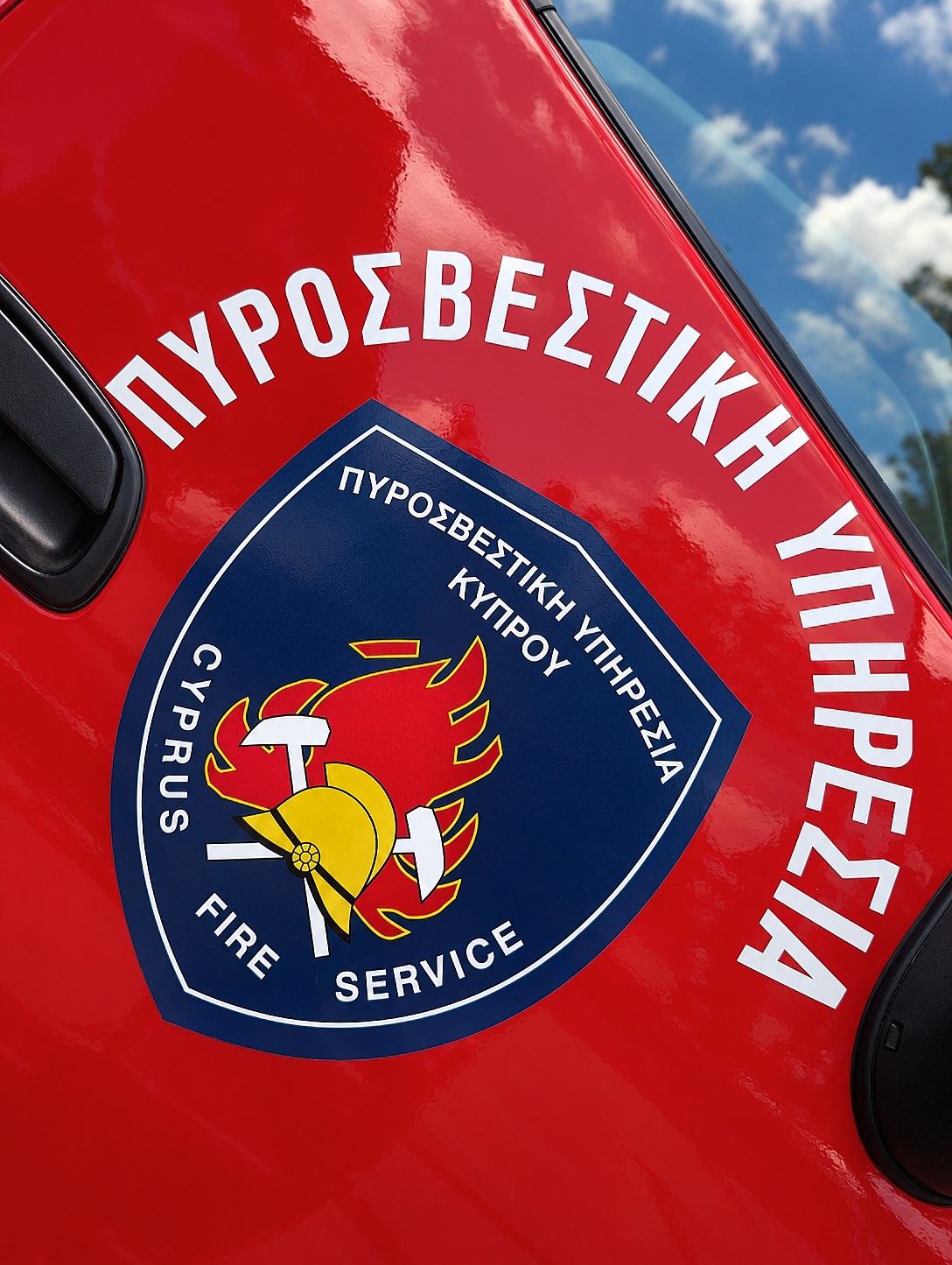
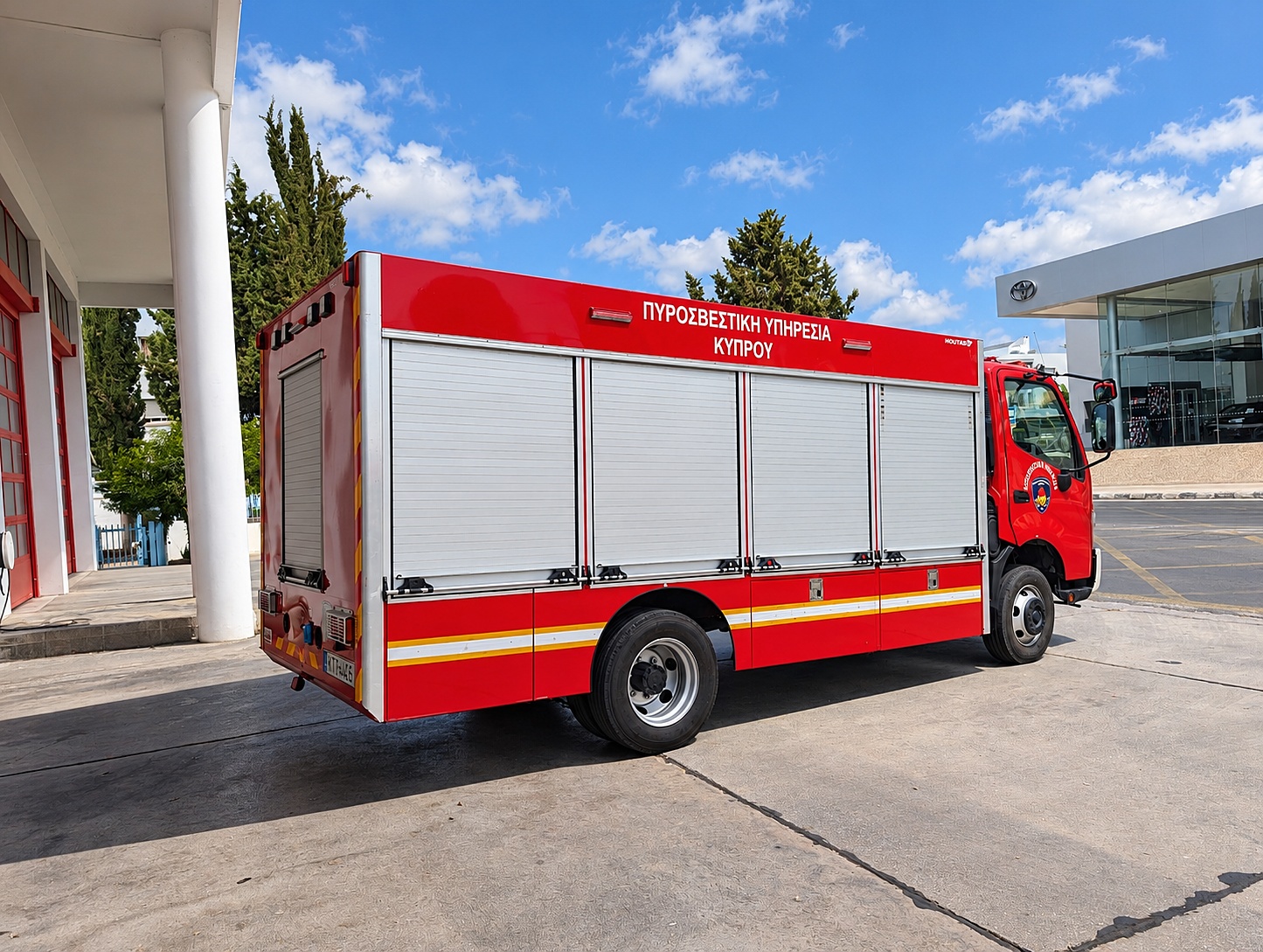
Before getting into the stations themselves, it's worth understanding what the Cyprus Fire Service actually is. Unlike the UK's patchwork of county and combined services, Cyprus runs a single national fire service — the Πυροσβεστική Υπηρεσία Κύπρου — with headquarters in Nicosia and jurisdiction across the whole Republic.
The service in its modern form dates back to 1960, though organised firefighting on the island stretches back to the 1920s when municipal volunteers and a "Police Fire Brigade" handled calls. For decades it sat inside the structure of the Cyprus Police, until October 2021 when it was formally established as an independent service in its own right.
Today it employs around 721 personnel, supported by roughly 120 part-time (volunteer) firefighters who crew the country's Rural Fire Stations. The service's remit is broad: firefighting in buildings, rural areas and forests; rescues from rubble, heights and water; major traffic and aviation accidents; ship, aircraft and petroleum installation fires; and chemical (HAZMAT) incidents. Emergency calls go through 112 or 199.
That national structure is why a two-person station in a village and a seven-person city station ultimately answer to the same organisation — and why the contrast between them is so interesting.
Peyia: A Rural Fire Station
The first stop was Peyia Fire Station, in the Paphos district. Peyia sits on the western edge of Cyprus, close to the wild, dry Akamas peninsula — a stretch of scrub, tracks and coastal communities where the wildland-urban interface is never far away.
Peyia is classed as a rural fire station, and it's a good example of what that means in the Cypriot context. The Cyprus Fire Service operates a network of these smaller, locally-based stations alongside its main city stations, and they're crewed largely by the service's part-time (volunteer) firefighters. The idea is straightforward: get a small, capable resource close to the communities and the countryside it protects, so that fires can be hit hard and early before they take hold.
In practice, Peyia is crewed by just two firefighters. That's a sobering number when you're used to UK watch strengths, but it reflects the station's role as a first-strike, quick-attack resource rather than a full urban pump. They attend rural fires — grass, scrub, agricultural and the kind of hillside vegetation fires that, in a hot, dry climate, can race towards properties remarkably quickly. Think of it as an outpost: a small team whose value is in being there, close to the risk, ready to go.
The Unimog
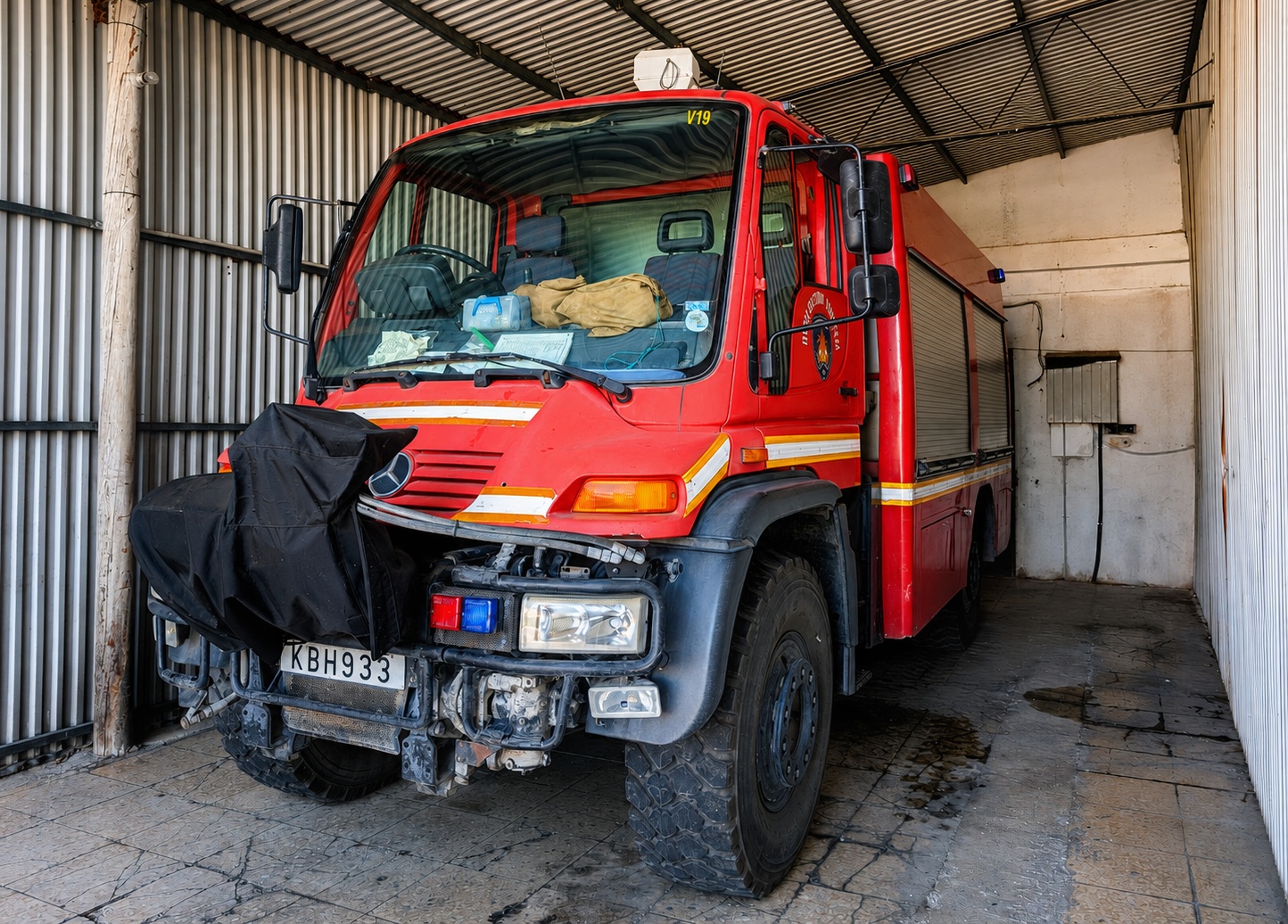
Peyia's frontline appliance is a Mercedes-Benz Unimog firefighting appliance. The Unimog is a proper go-anywhere chassis — portal axles, high ground clearance, serious off-road ability — and it's a favourite for rural and wildland work well beyond Cyprus. The Cyprus Forest Department also runs a fleet of Unimog-based firefighting trucks for exactly the same reasons: when the fire is off the tarmac, you need something that can get off the tarmac too.
The Peyia machine carries 4,500 litres of water and 162 litres of foam — a useful punch for a rural appliance, and enough to make a genuine difference to a developing vegetation fire before the larger city resources arrive. For a two-person crew, that water capacity is the difference between making an attack and simply holding on.
Sharing the Station
One detail that catches a UK firefighter's eye is that Peyia Fire Station is shared with the local ambulance unit. Co-location of fire and ambulance isn't unusual in parts of Europe, but it's a reminder of how differently small services are stitched together when resources are limited. The building serves both, and the proximity is a practical answer to covering a spread-out rural population.
"Protect the Village": The Land Rover Defender
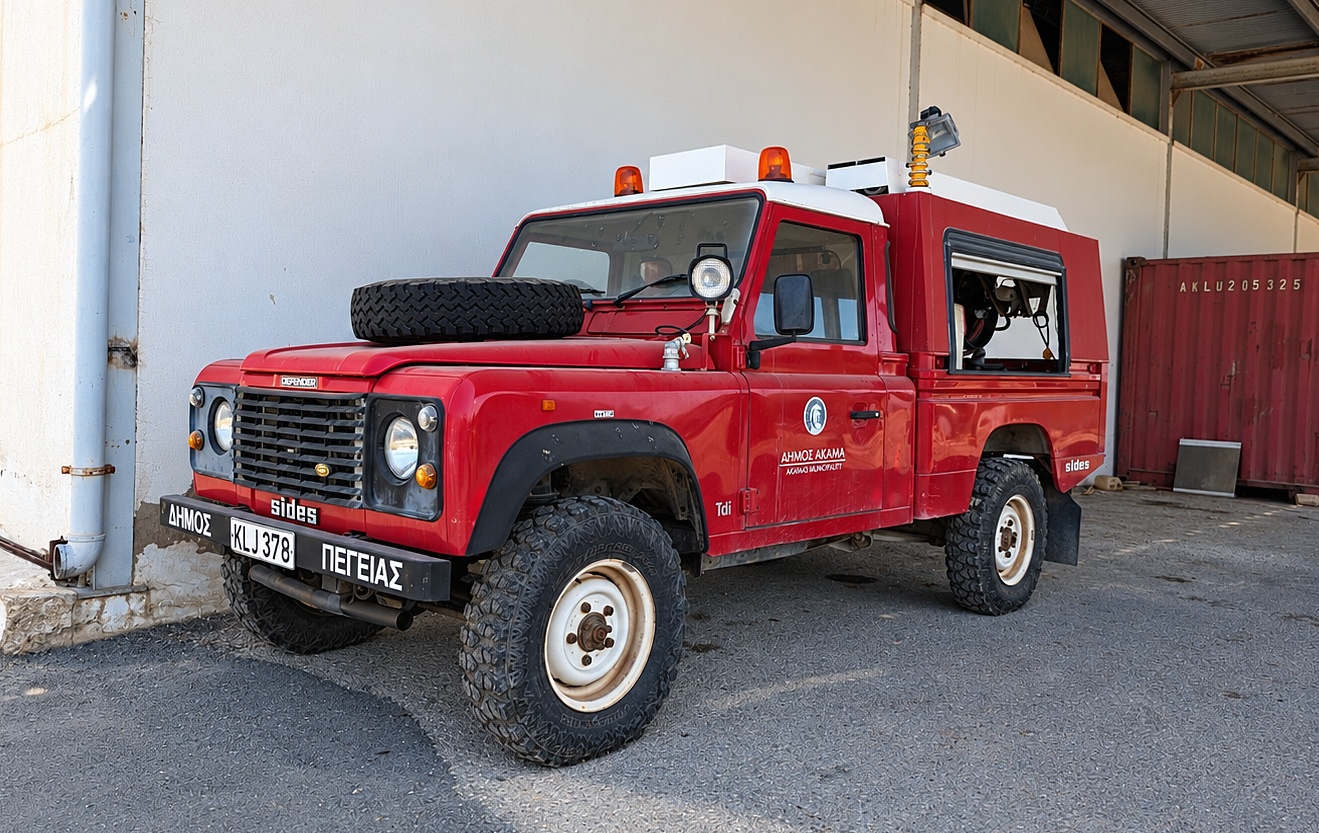
Among the more unusual vehicles based around Peyia is a Land Rover Defender light fire appliance that doesn't actually belong to the Cyprus Fire Service at all.
It's a Sides-built Land Rover Defender Td5 fire appliance — a small, purpose-built 4x4 fire engine on the classic Defender chassis. Sides is a long-established French fire and rescue bodybuilder, and the Td5 is the five-cylinder diesel Defender that became the workhorse of the later Series. The combination is exactly what it sounds like: a compact, go-anywhere fire appliance with a modest water tank and a pump, built for getting into places a full-size pump simply can't.
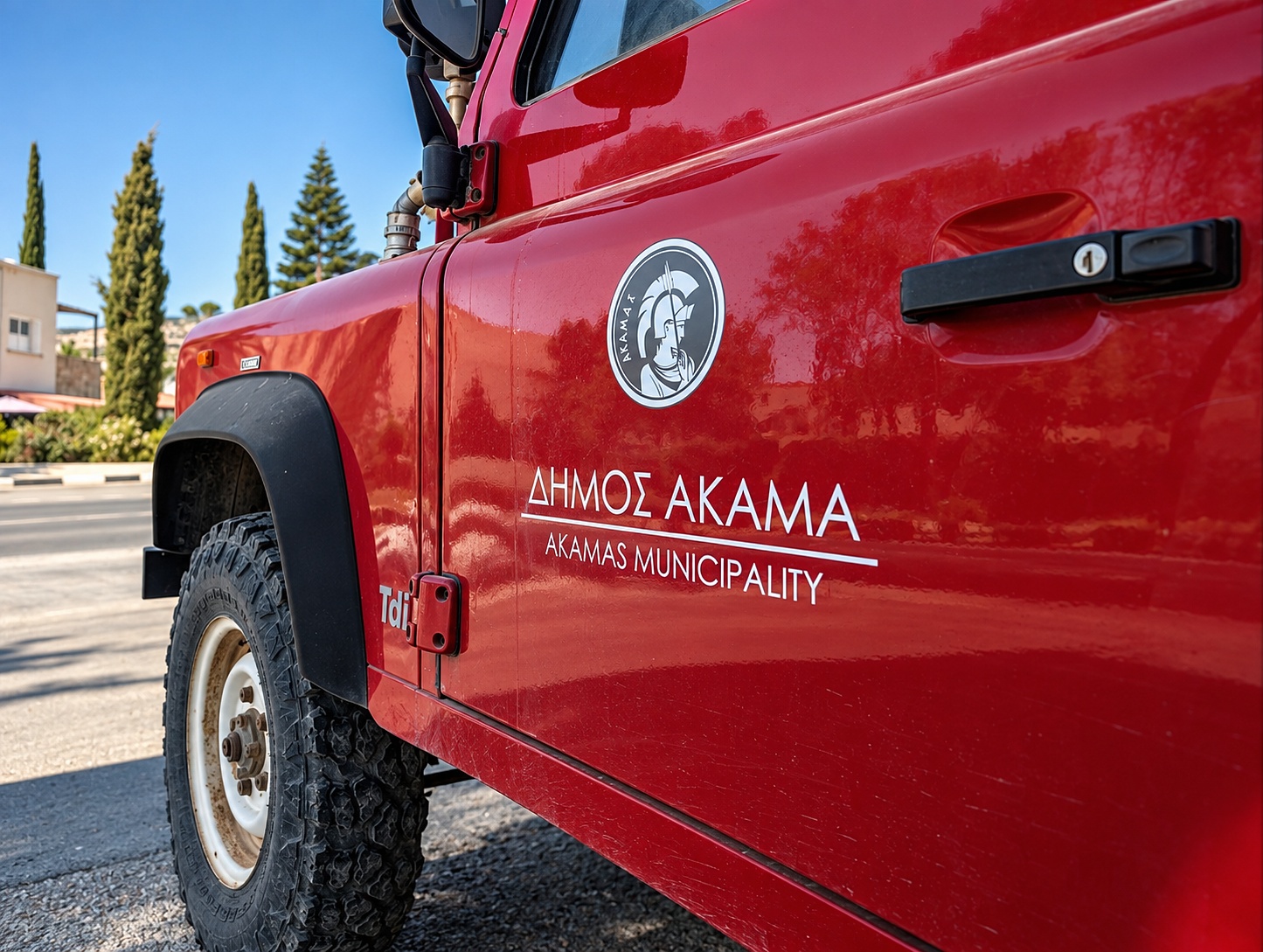
This particular Defender was originally operated by Peyia Municipality and now carries Akamas Municipality markings. In other words, it's a locally-owned asset rather than a national Fire Service one — a community's own answer to its own wildfire risk.
And the role? One local firefighter simply described it as being there to "protect the village."
That phrase captures the vehicle's purpose better than any spec sheet. With much of the surrounding area made up of dry vegetation, rural tracks and communities close to the wildland edge, the Defender gives crews a small, highly mobile 4x4 capable of getting into narrow tracks, scrubland and difficult terrain around Peyia and the wider Akamas area. It's there to respond quickly to developing fires before they threaten homes and property — to nip things in the bud.
Unlike the larger frontline appliances used by the Cyprus Fire Service, the Defender is designed for local protection and rapid access into areas that conventional fire engines may struggle to reach. It's a good example of the more localised wildfire protection used in Cyprus, sitting alongside the larger resources of the Cyprus Fire Service and the Forestry Department.
Paphos Fire Station
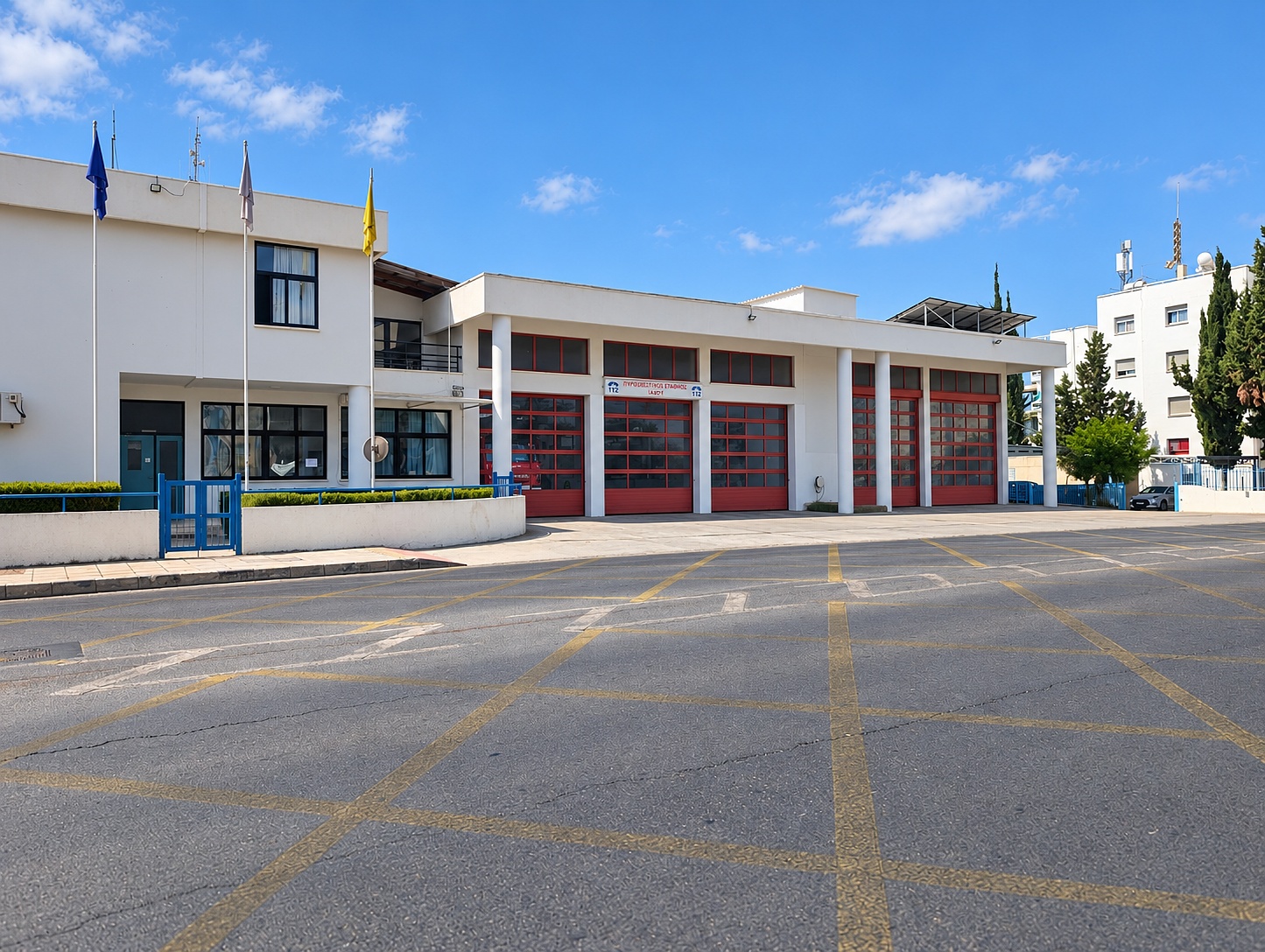
From the two-person rural outpost, the visit moved on to Paphos Fire Station — a very different proposition.
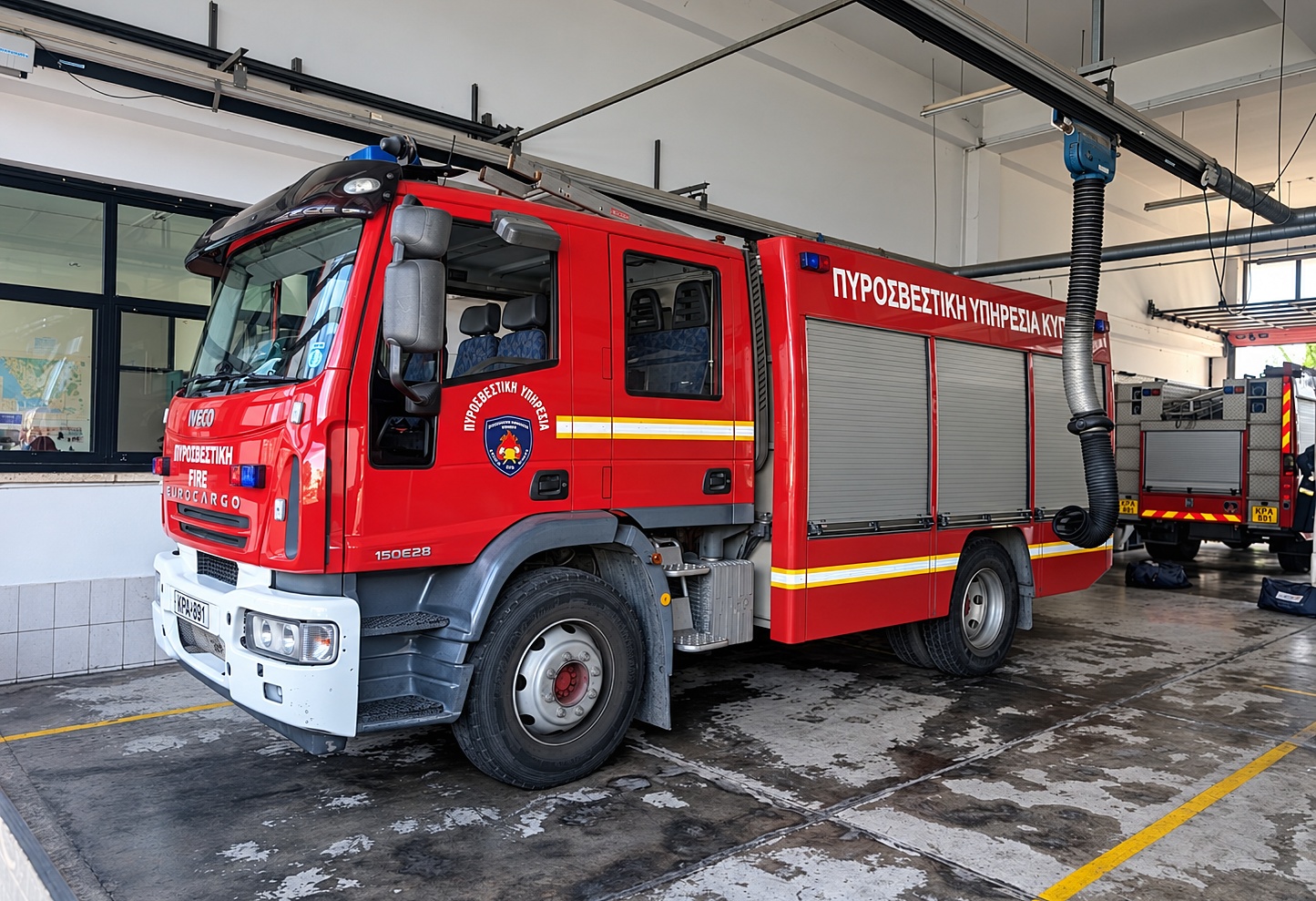
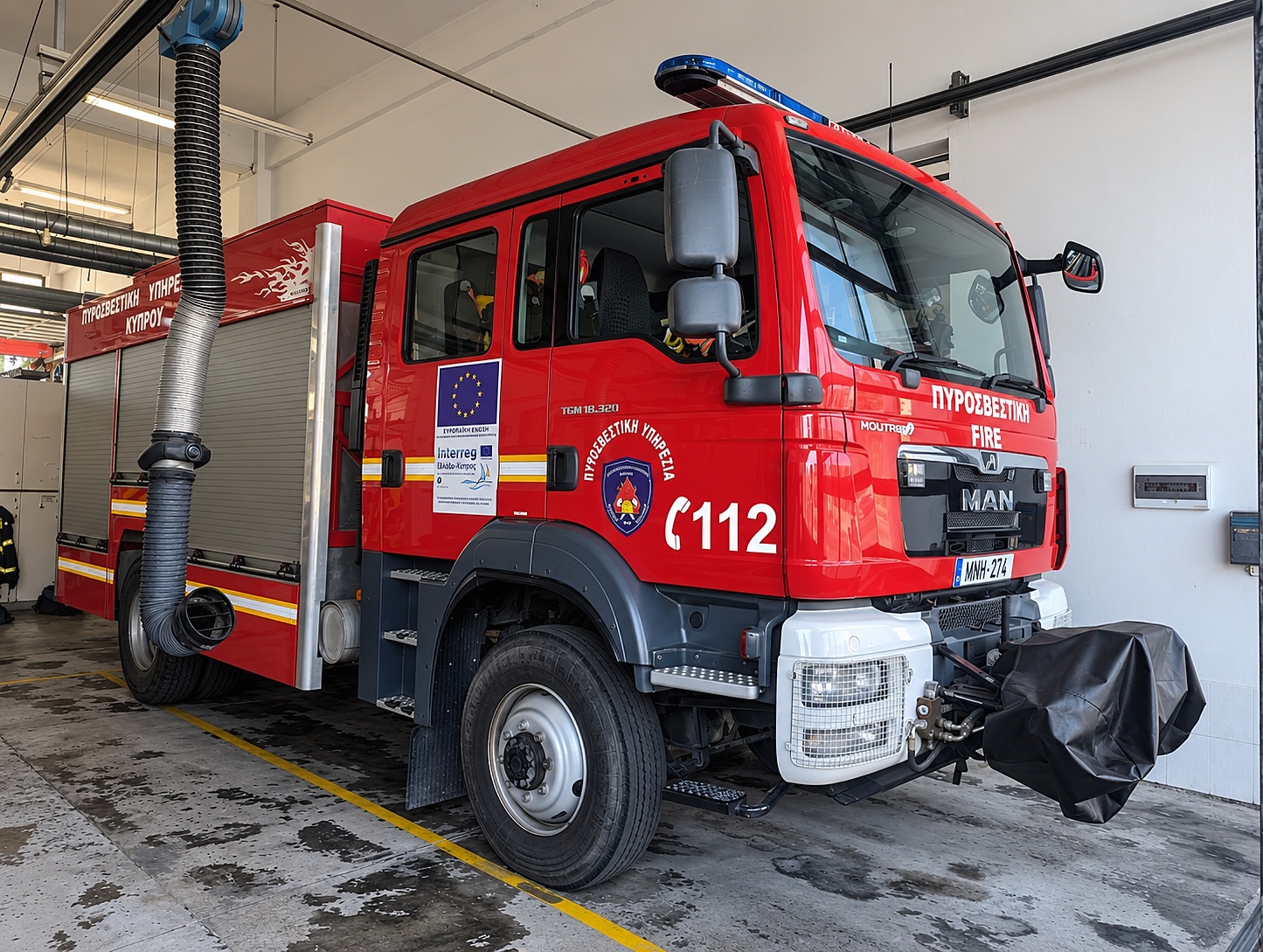
Paphos is one of the Cyprus Fire Service's main city stations, covering a busy coastal district that blends permanent residents, a large expat community and a tourist population that swells dramatically through the summer. The risk profile is correspondingly broad: hotel fires, road traffic collisions on coastal roads, tourist incidents, and — every summer — the threat of wildfire pushing in from the hills.
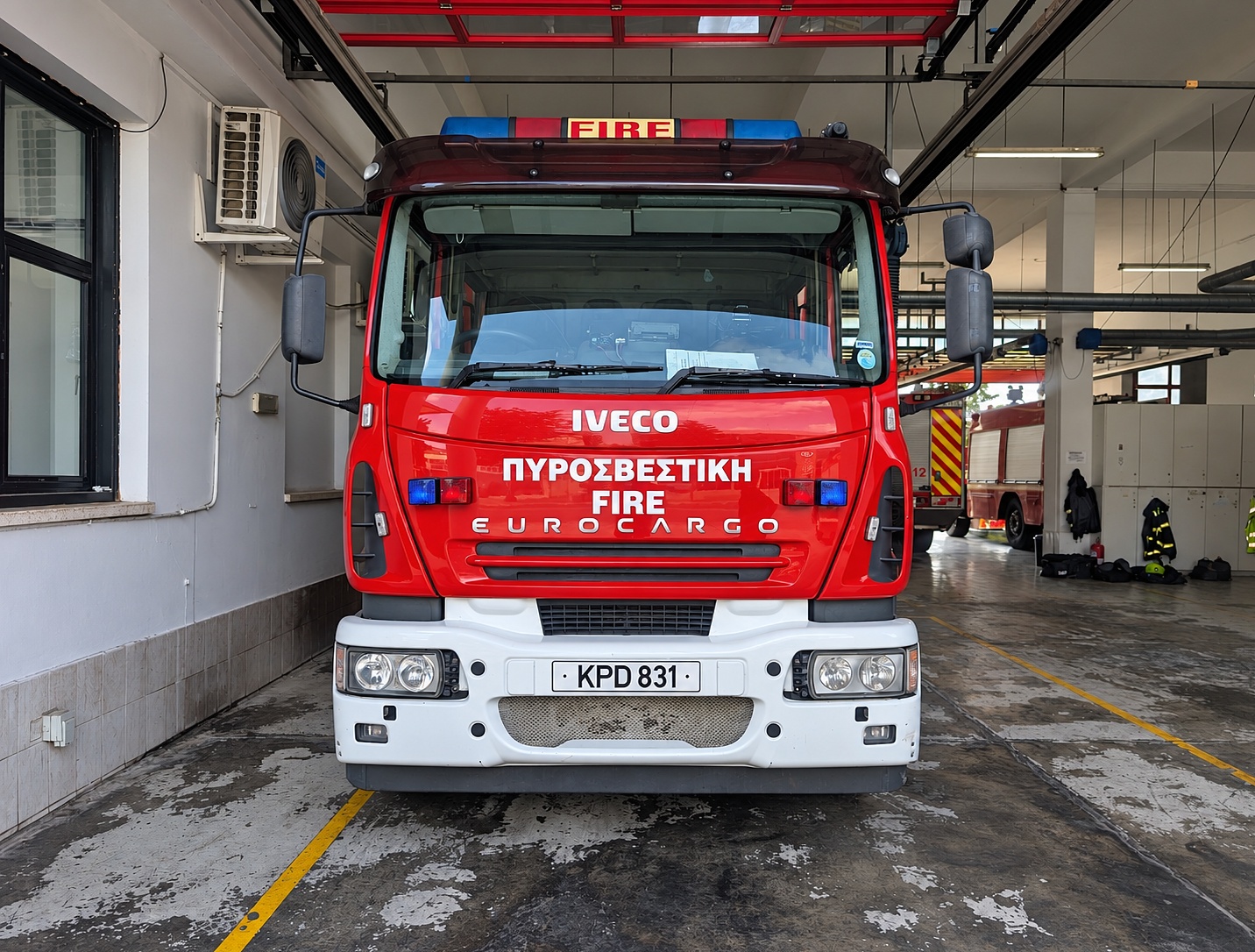
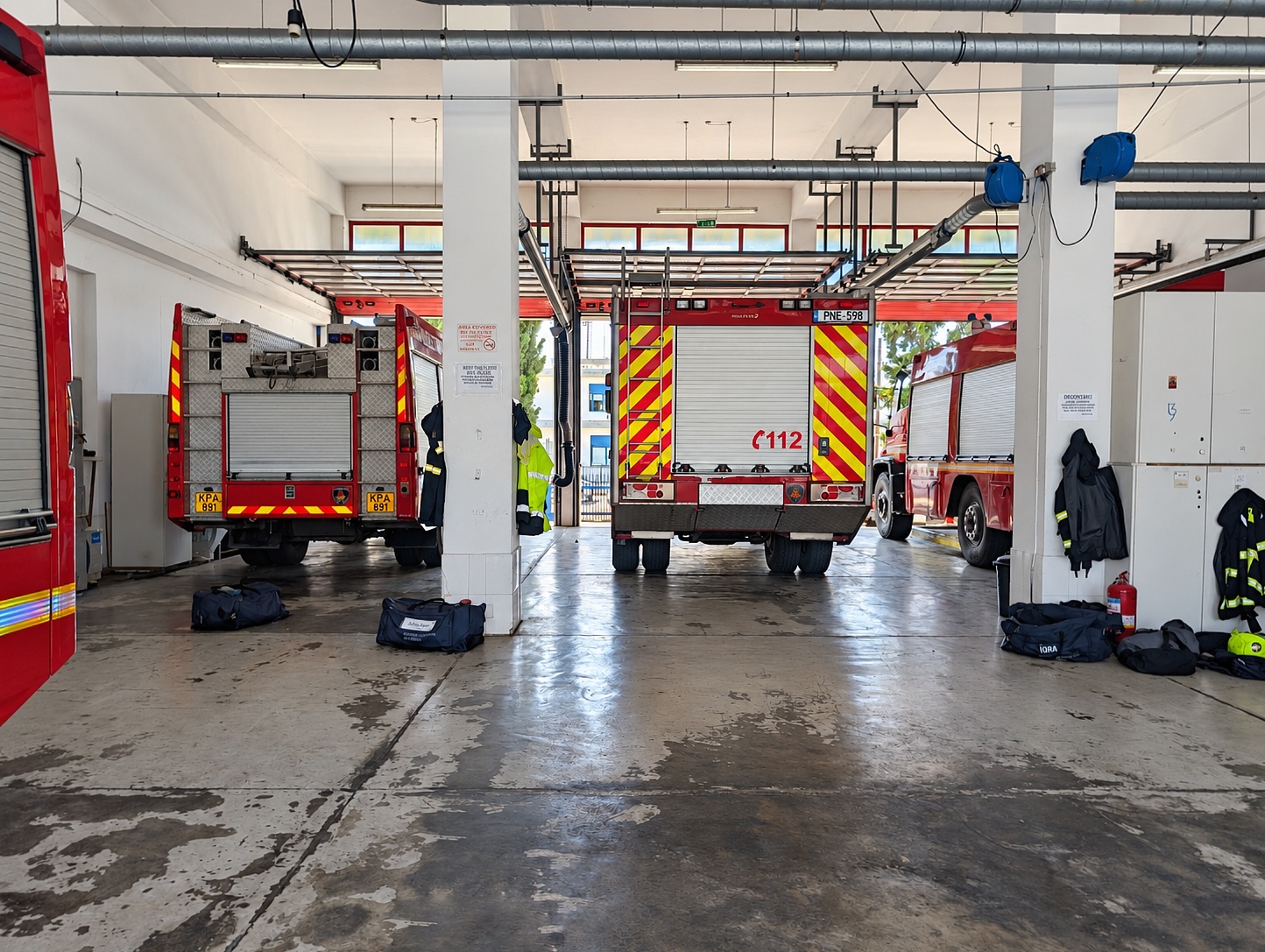
The station was being crewed by seven firefighters on the visit. What makes that number work is jump crewing — the same small crew flexing across a whole rack of appliances depending on the shout. On the run during the visit were:
- a pump (the standard first-response appliance)
- an aerial (the MAN 36m Aerial Ladder Platform — more on that below)
- a rescue pump
- a water carrier
- a wildfire support vehicle
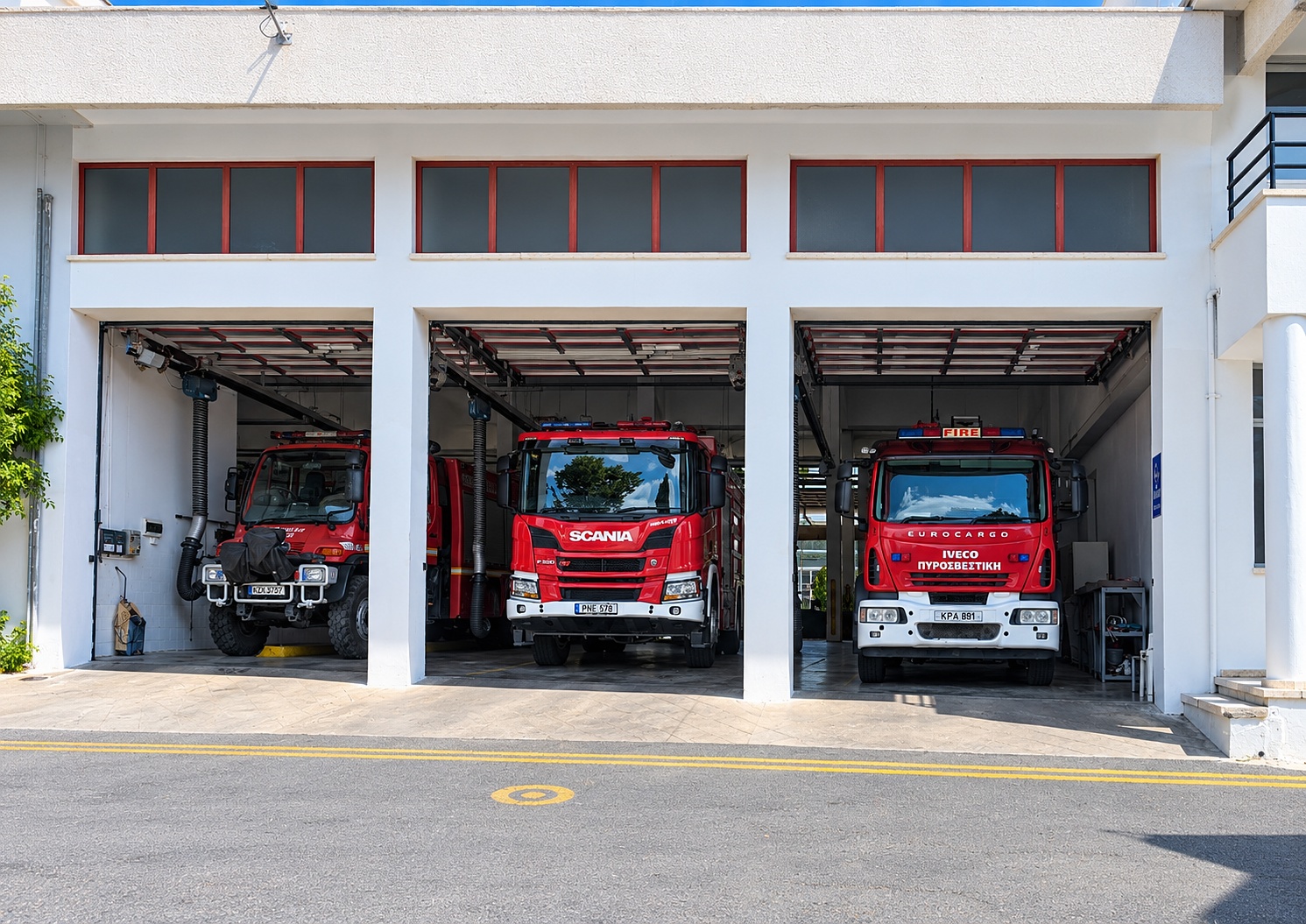
Jump crewing is a familiar concept to anyone who's served on a smaller UK station, but the breadth here is striking. Seven firefighters covering five distinct appliance types means the crew has to be competent across everything from ladder-pump work to bulk water relay to wildland support. It's a generalist's game.
Specialist Capability
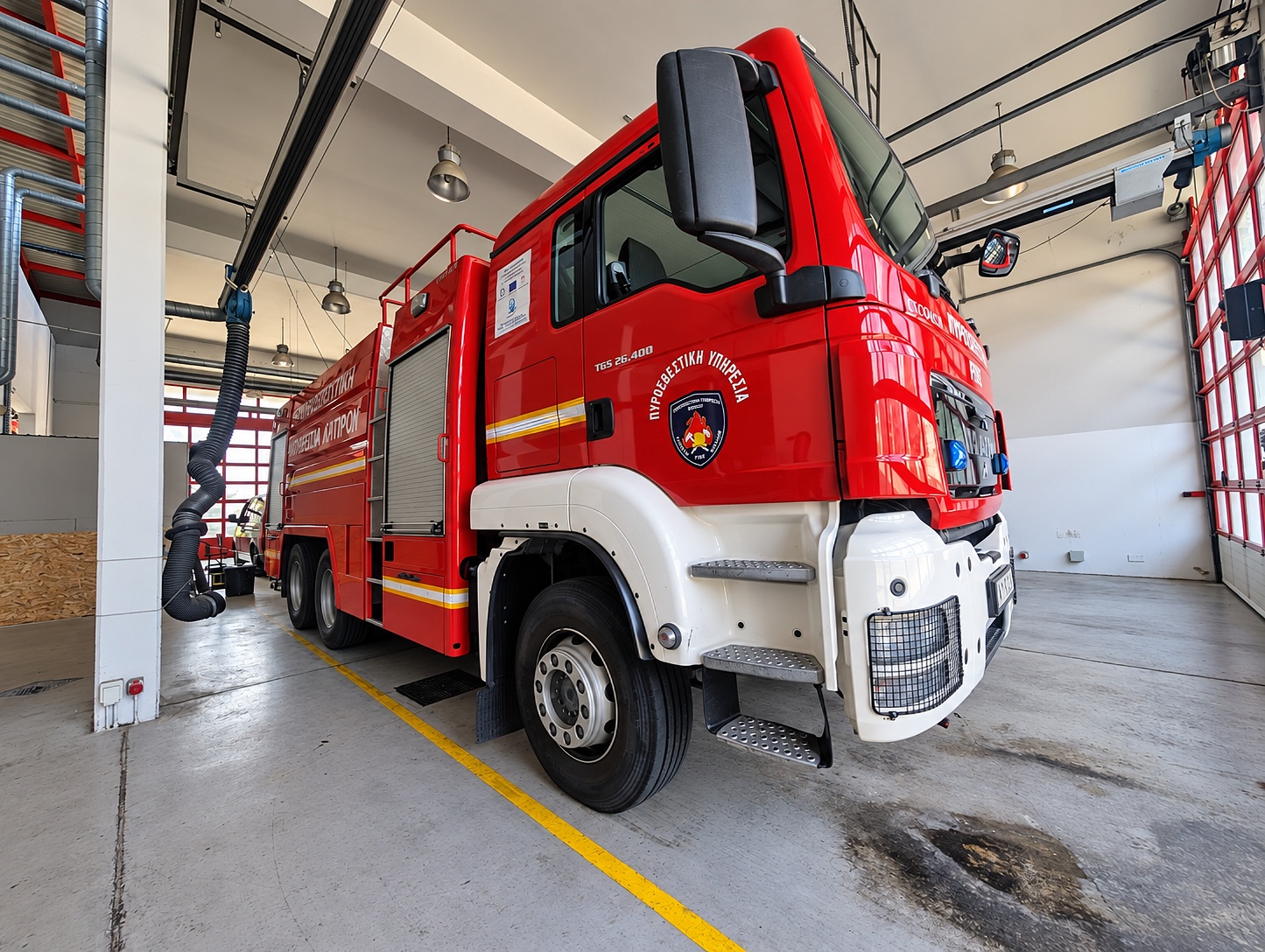
Beyond the core appliances, Paphos houses a chemical incident unit — the HAZMAT response capability for the area. Given the service's national remit for chemical fires and petroleum installations, that's a significant asset to have on a city station.
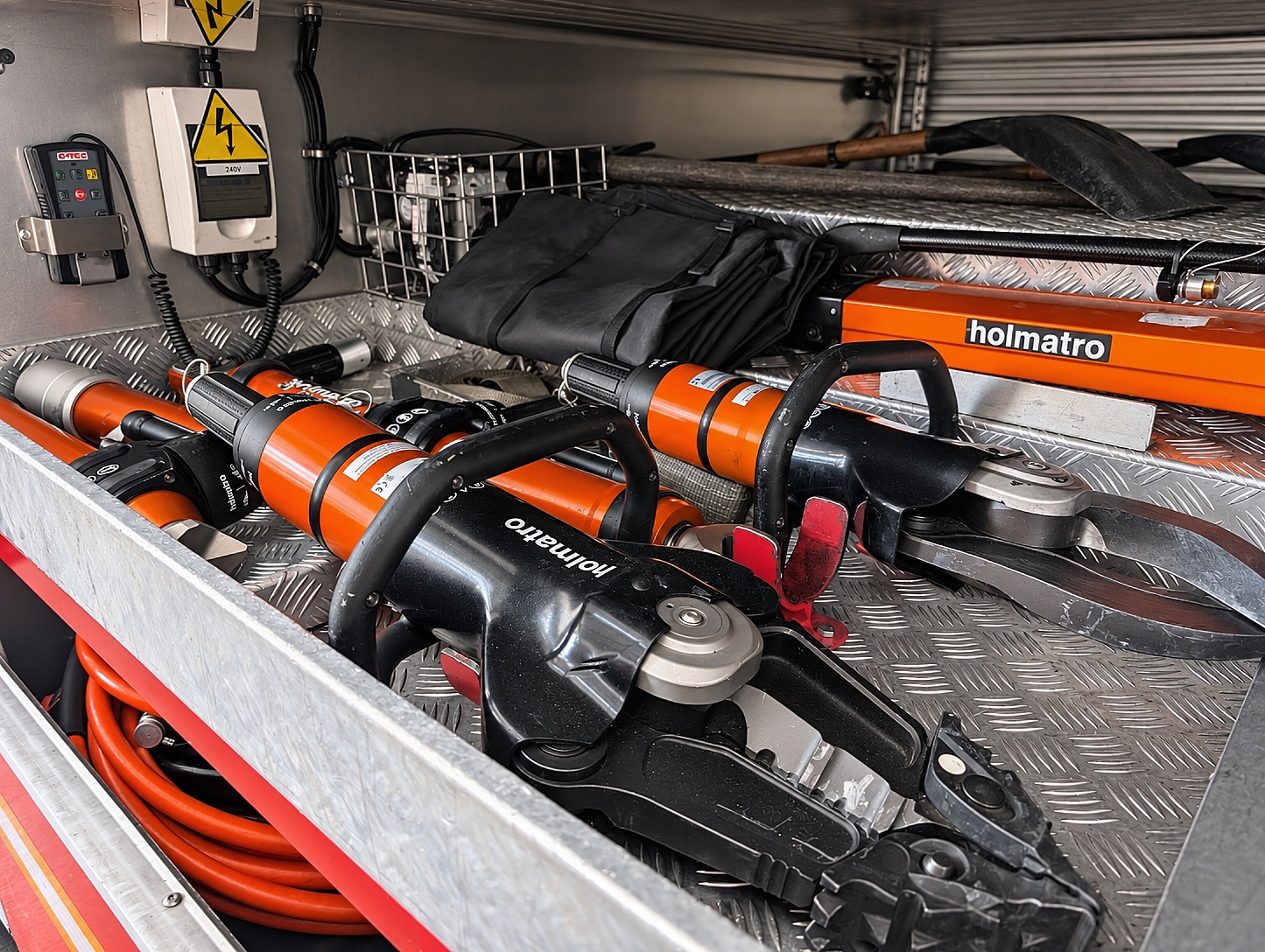
The station also holds a rope rescue speciality, carried on the rescue pump. For a district that includes coastline, gorges and the steep, broken ground of the Akamas, that high-angle capability matters. Alongside it, the rescue pump carries Holmatro cutting equipment — the same hydraulic rescue tool brand familiar to UK firefighters, used for extrication at road traffic collisions and structural collapse.
The MAN 36m Bronto
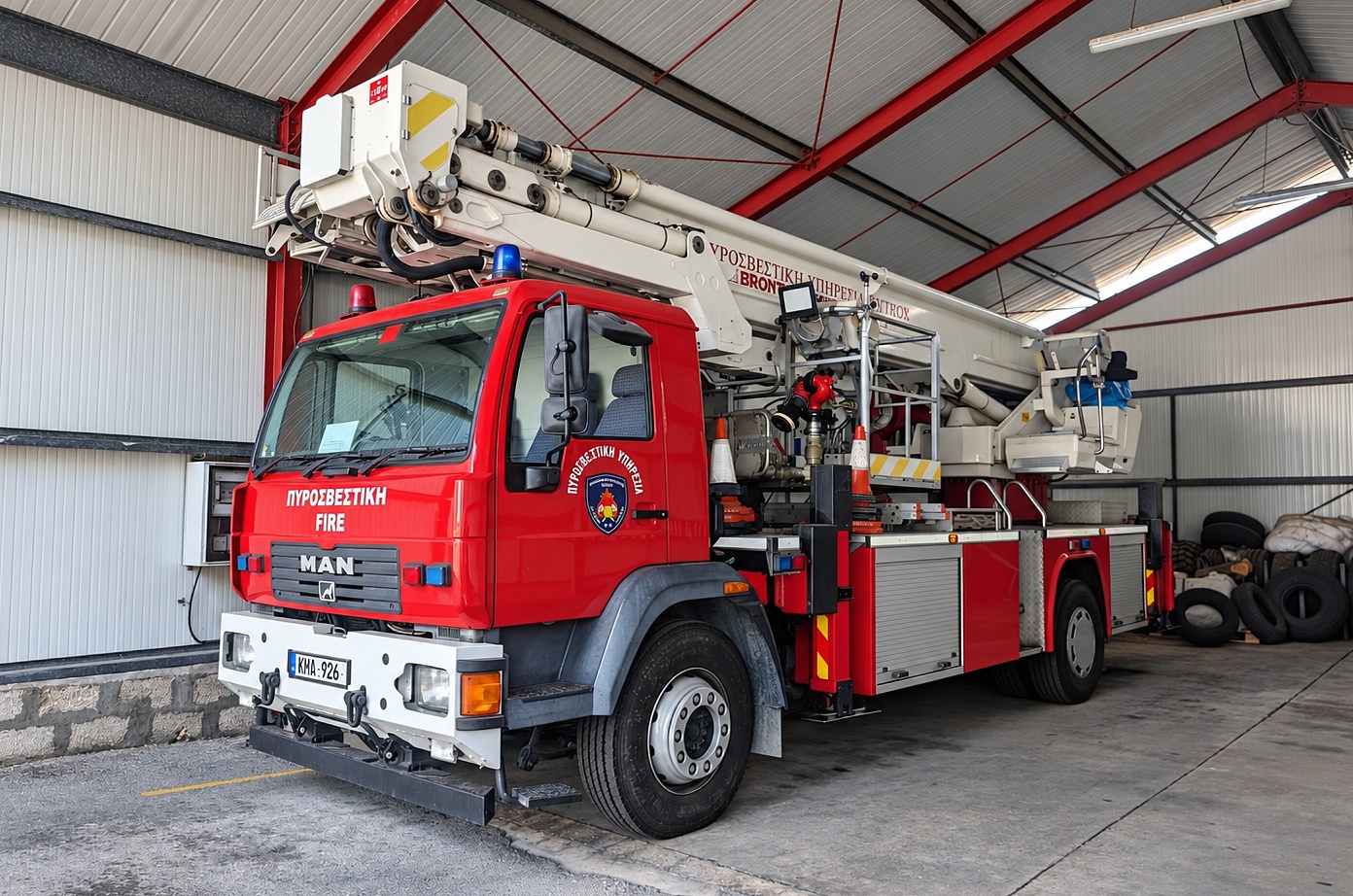
The flagship of the Paphos fleet is a MAN-chassised 36-metre Aerial Ladder Platform with Bronto Skylift booms.
Bronto Skylift is the Finnish manufacturer that dominates the truck-mounted aerial platform market, with a range spanning from around 17 metres up to well over 100. A 36-metre platform sits in the middle of the range — tall enough to reach the upper floors of the hotel-lined seafront and the kind of mid-rise residential blocks that have gone up across Paphos in recent years, while still being compact enough to work the narrower streets of an older coastal town.
Mounted on a MAN chassis, it gives Paphos a genuine high-level rescue and firefighting capability — the ability to get crews and water above a fire, to carry out rescues from height, and to support operations that a pump alone simply can't reach.
Breathing Apparatus: Dräger Packs, Scott Cylinders
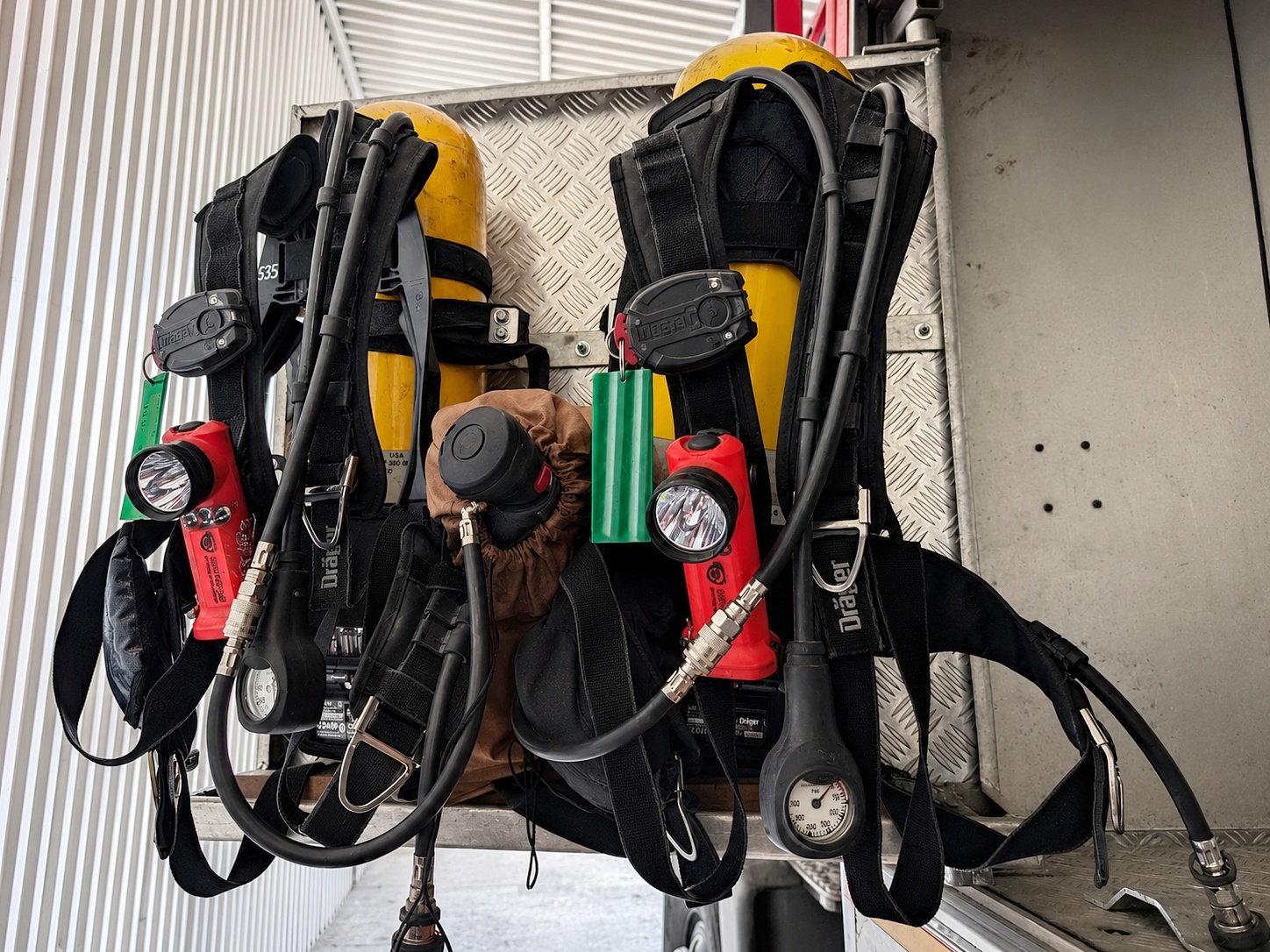
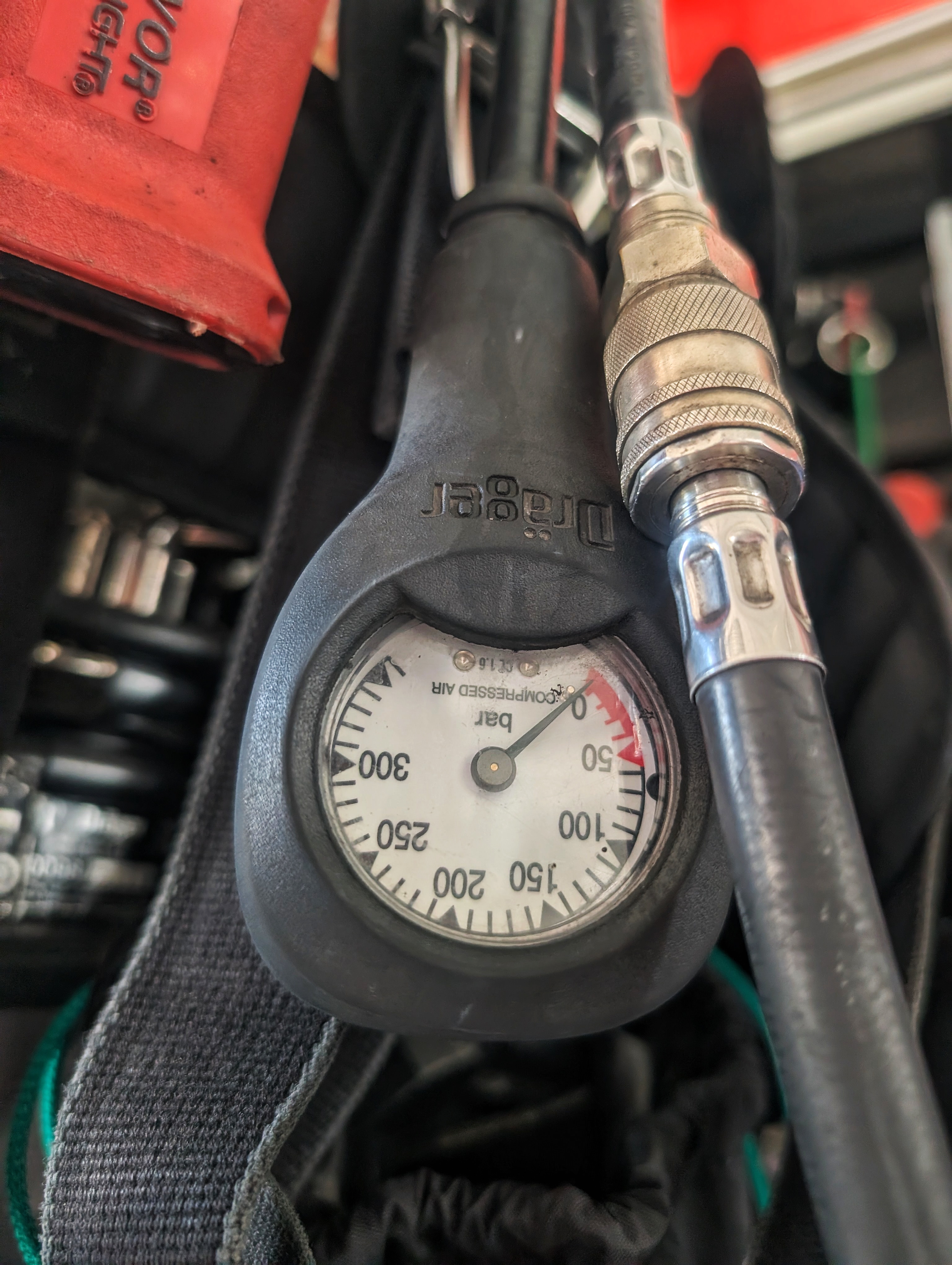
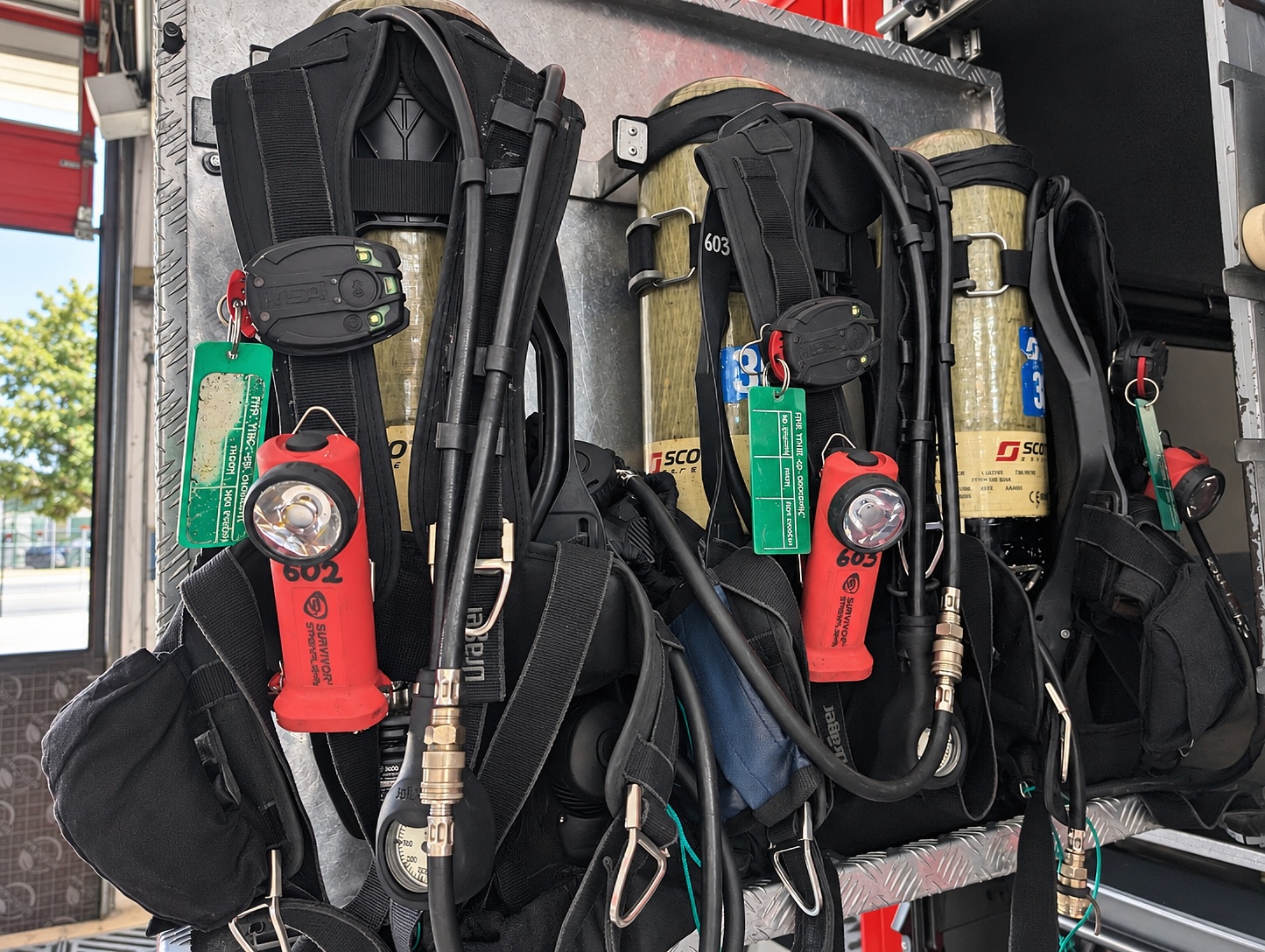
One of the small details that always interests us on these visits is breathing apparatus. The Cyprus Fire Service runs Dräger BA packs — the German-made sets used widely across European services — paired with Scott cylinders.
It's a combination that makes a lot of sense. Dräger's positive-pressure breathing apparatus is well-regarded for its robustness and ergonomics, while Scott (now part of MSA) cylinders are a common, reliable choice of air supply. Mixing the two isn't unusual where a service has standardised on one manufacturer's face mask and regulator but sources cylinders from another — the key is that the cylinder and the set are compatible at the connector.
For the Peyia and Paphos crews alike, that BA is the last line when a fire goes interior or a HAZMAT call turns complex.
Familiar Kit: The British Legacy
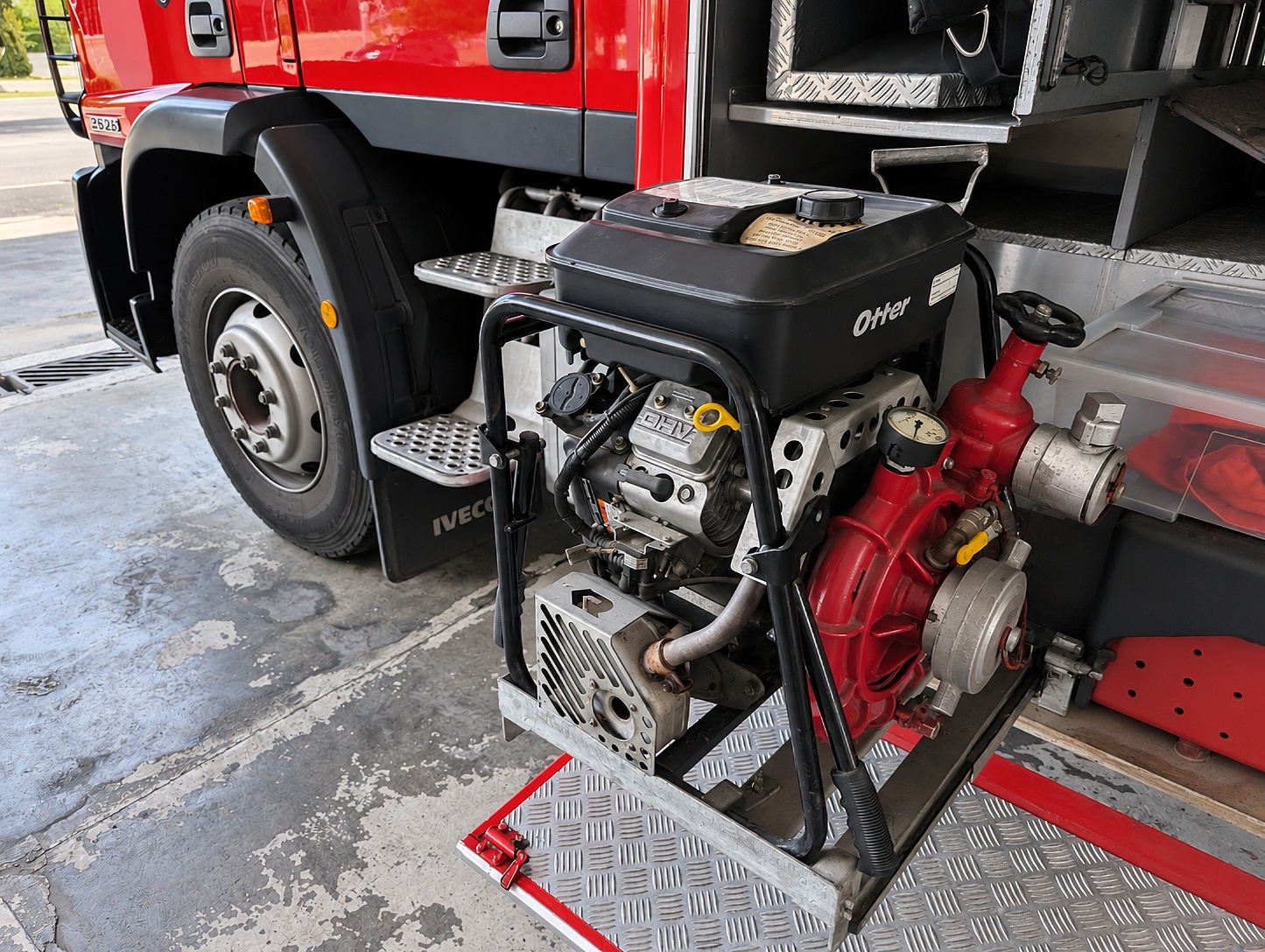
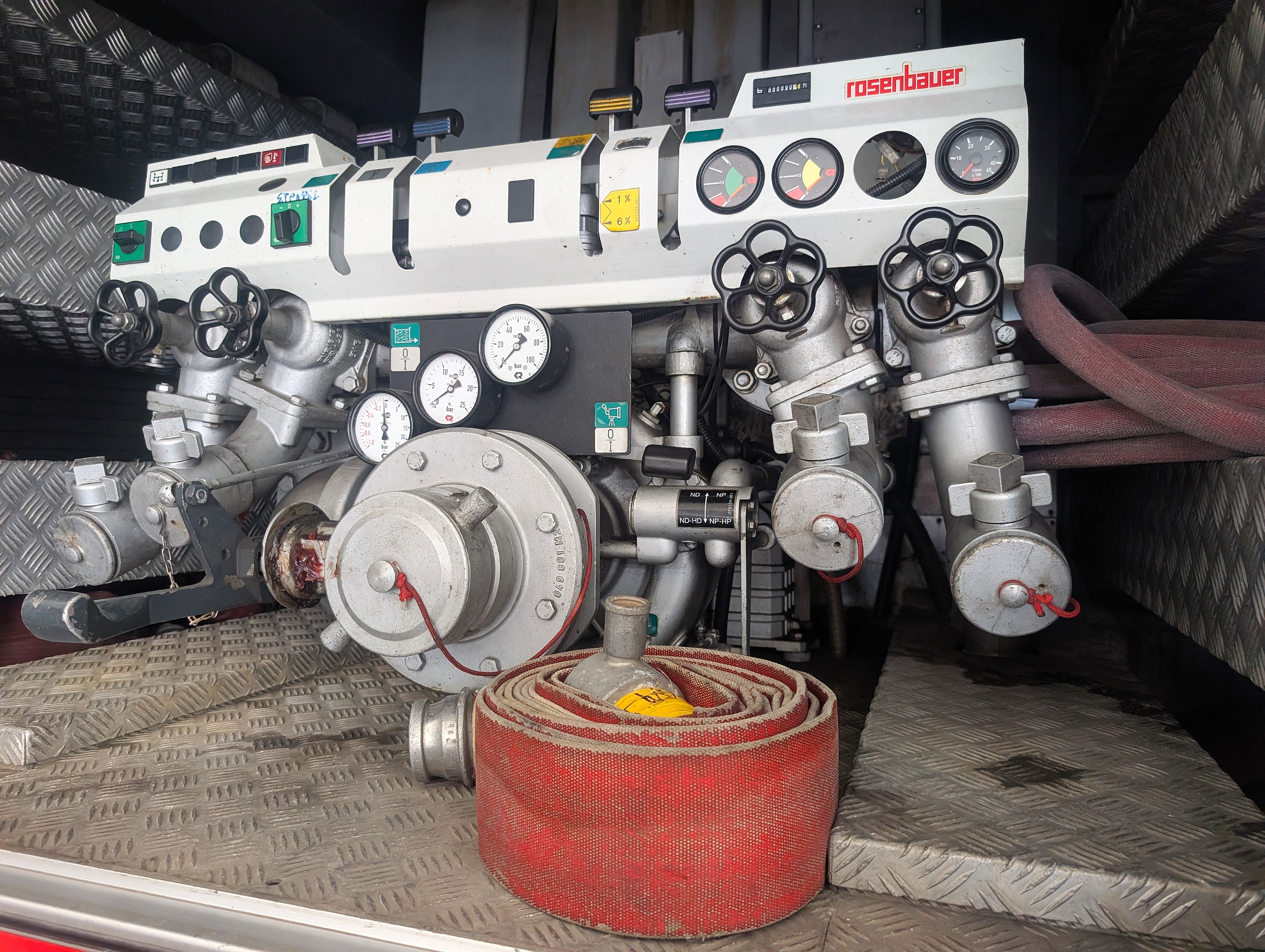
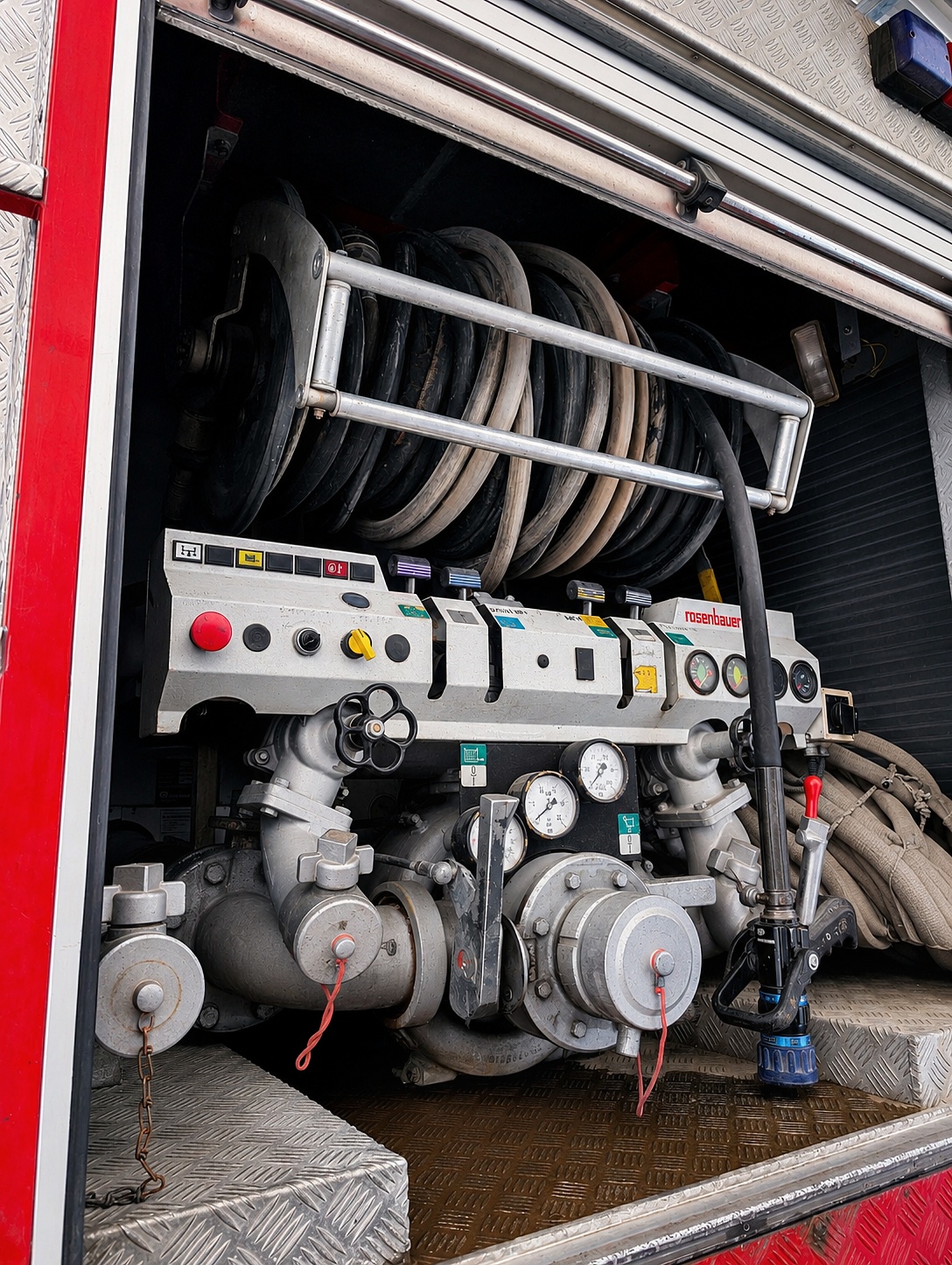
Here's the thing that really strikes you walking around a Cypriot fire station: for all the differences, an awful lot of it looks remarkably familiar. The hose couplings are the same. The ladders are the same style. The BA setup, complete with entry-controlled BA boards for firefighter safety, runs on the same principles we use at home. There are Rosenbauer Otter light portable pumps — the same light portable pump UK crews know well for drawing from open water. And the hydrants are underground, worked with the classic standpipe, key and bar — and opened with a nifty little magnetic cover lifter called an Italifter, which lifts the hydrant cover cleanly without prying.
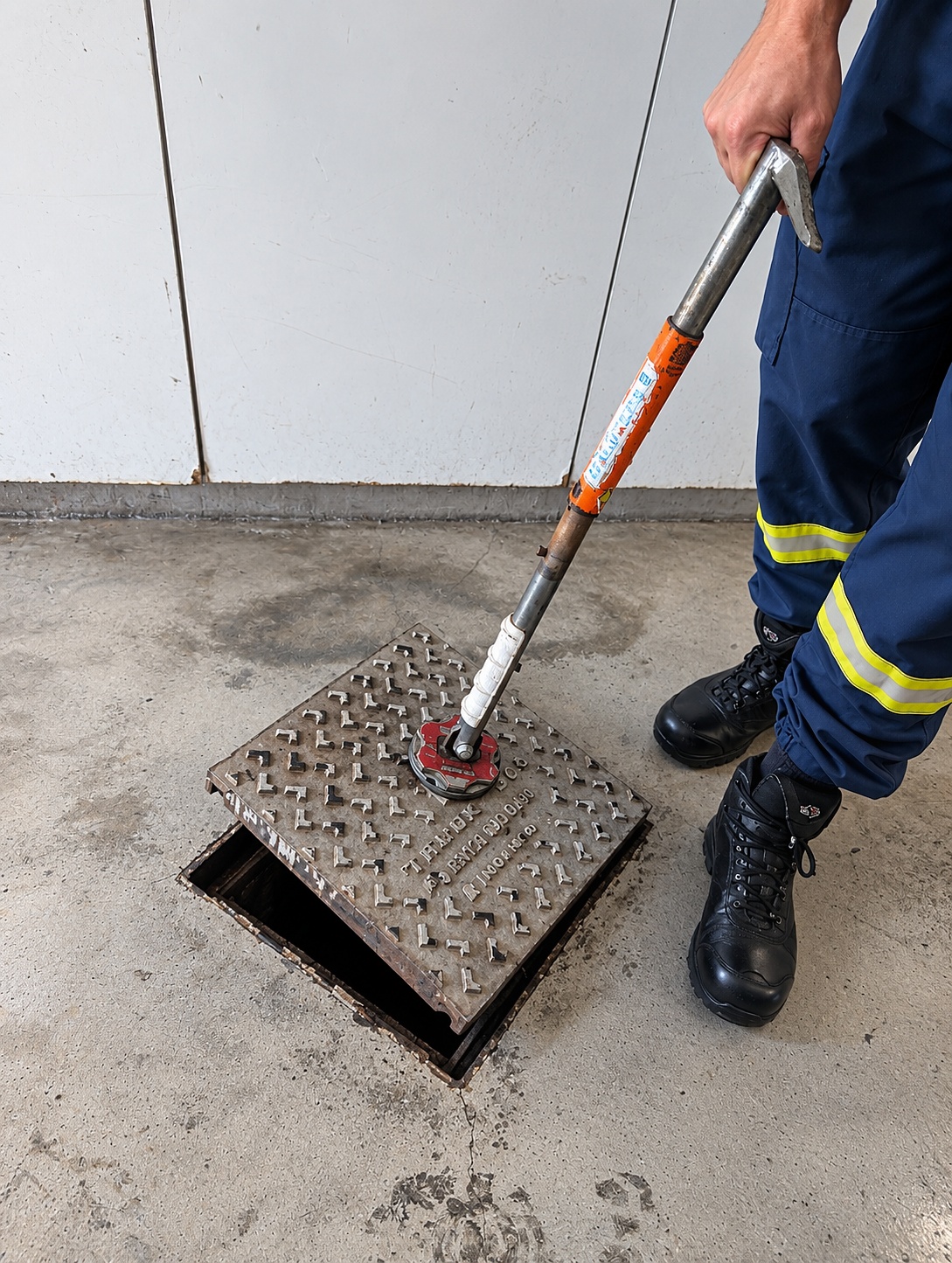
That's not coincidence. Cyprus was a British colony until 1960, and the Fire Service grew up inside the structure of the Cyprus Police — itself modelled on British lines. The "Police Fire Brigade" of the 1930s and 40s was built to British colonial standards, and the kit, the couplings, the hydrant system and the operating procedures that came with that era left a mark that's still visible on the station floor today. When a Cypriot firefighter reaches for a standpipe and key, they're reaching for the same tool a UK firefighter reaches for — because the system was laid down the same way.
It's a quiet thing, but it matters. It means that despite the language difference and the Mediterranean climate, a UK firefighter walking onto a Cypriot station would understand the vast majority of what they see. The couplings click together the same way. The BA board works the same way. The hydrant comes up the same way. Sixty-odd years of independence haven't erased the shared DNA.
Two Stations, One Service
Standing in Peyia with two firefighters and a Unimog, then walking into Paphos with seven firefighters and a 36-metre aerial, is a study in contrasts. But the contrast is the point. The Cyprus Fire Service is one national organisation covering an entire island, and it does that by layering its resources: rural outposts for quick attack, city stations for the heavy lifting, specialist kit where it's needed, and a volunteer backbone holding up the rural network.
What doesn't change is the people. Whether it's a two-person village station sharing a building with an ambulance, or a seven-person city crew jump-manning five appliances, the underlying job is the same one UK firefighters will recognise instantly: turn out, get there, deal with it, go home.
Our thanks to the Cyprus Fire Service — and especially the crews at Peyia and Paphos — for the warm welcome and the time they gave up to show visiting firefighters around.

Comments (1)
Not sure if you are aware but there are four fire stations which cover the sovereign base area operated by the UK Defence Fire & Rescue Service. These not only protect military assets but also the local villages surrounding the SBA. They also support the Cyprus Fire Service. Look in to it, it could be worth covering if you’re ever back in Cyprus.