Introduction
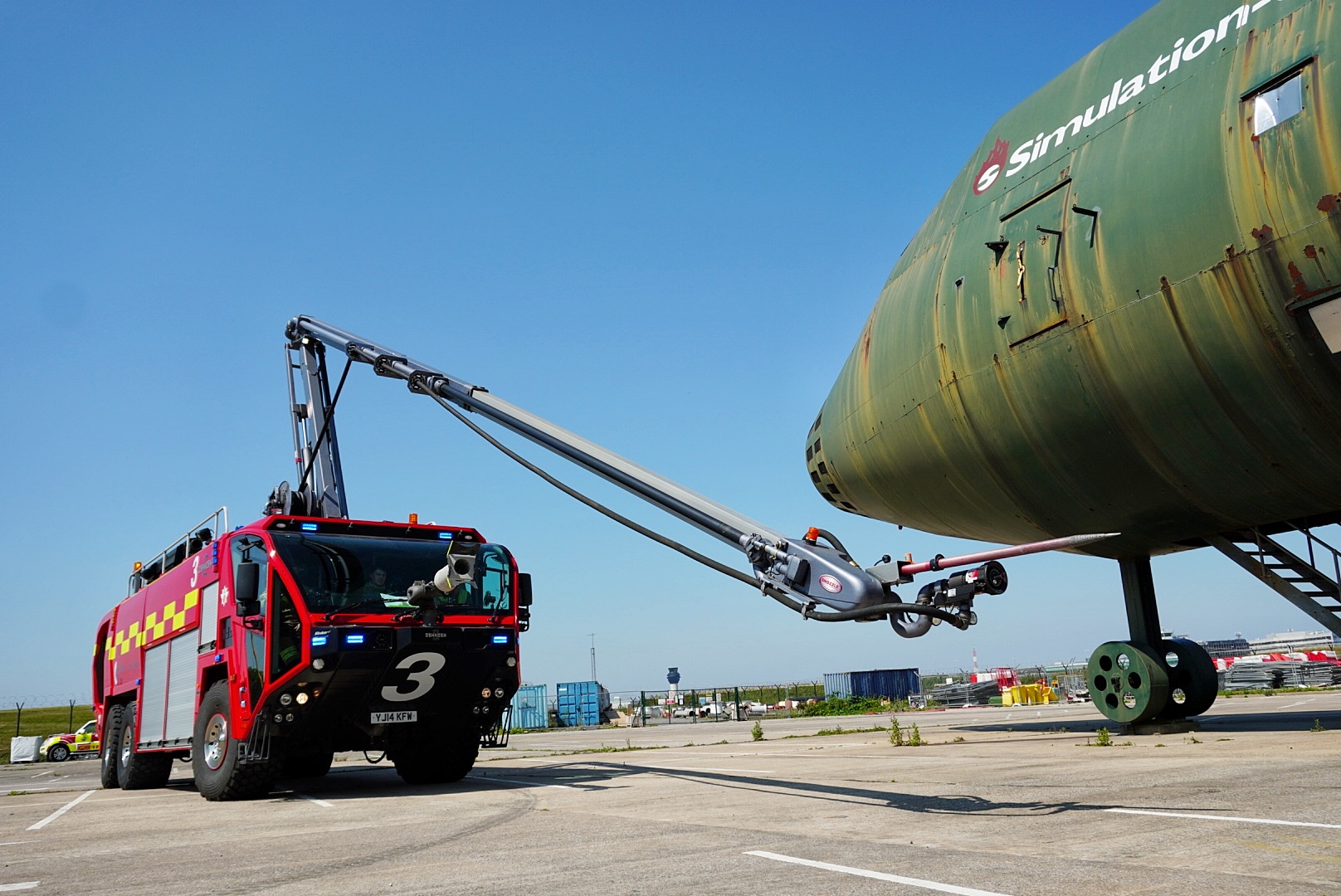
Manchester is the third-busiest airport in the United Kingdom, handling more than 32 million passengers each year. With two active terminals, two full-length runways and a vast estate made up of hangars, offices, hotels, roads, car parks and other buildings, it is effectively a small town built around a major international aviation operation.
Protecting an airport of this size requires a substantial and highly capable fire and rescue service.
Operating from fire stations positioned on the north and south sides of the airfield, Manchester Airport Fire & Rescue Service provides emergency cover around the clock. Its crews can be called to anything from an aircraft emergency to a terminal fire alarm, medical incident, road traffic collision or fire elsewhere across the airport estate.
Serious aircraft incidents are thankfully rare, but the responsibility remains significant. Crews must be ready to respond immediately, meaning training, equipment checks and operational preparation form a major part of everyday life on the watch.
During 2025, Manchester Airport Fire & Rescue Service responded to 1,009 emergency calls.
We spent the day with Green Watch to find out what happens behind the scenes.
Beginning the Watch
Our day began at around 06:45, as members of Green Watch arrived at the North Fire Station to relieve the night crew.
A brief handover takes place between the watches. Handheld radios are exchanged and the incoming firefighters take over the riding positions of those finishing their shift.
It's a relatively informal arrangement between the crews, allowing the offgoing watch to get away slightly earlier and, for some, make it home in time for the school run.
But despite the relaxed nature of the changeover, responsibility for the airport has already transferred. A secure gate connects the fire station to the operational airfield, and responding appliances can be through it within seconds of an emergency call being received.
It's an early reminder that while many aspects of watch life feel familiar, this is still a fire station operating inside one of the country's busiest international airports.
Morning Briefing
The working day officially begins at 07:15, with Green Watch gathering around a large table in the station mess for the morning briefing.
Led by the watch management team, the briefing reviews any operational incidents and significant issues from the previous shift, alongside operational procedure alerts and relevant information affecting the airfield and the day's activities.
This might include defective hydrants, restricted access routes, ongoing maintenance work, unusual aircraft movements or anything else capable of affecting an operational response.
The day's training programme is also discussed. On the day of our visit, that included a planned combination drill at Manchester Airport's dedicated fire training ground.
With nothing safety-critical affecting the airport's operational response, the briefing concludes and the crews move out to begin their daily appliance and equipment checks.
Daily Appliance Checks
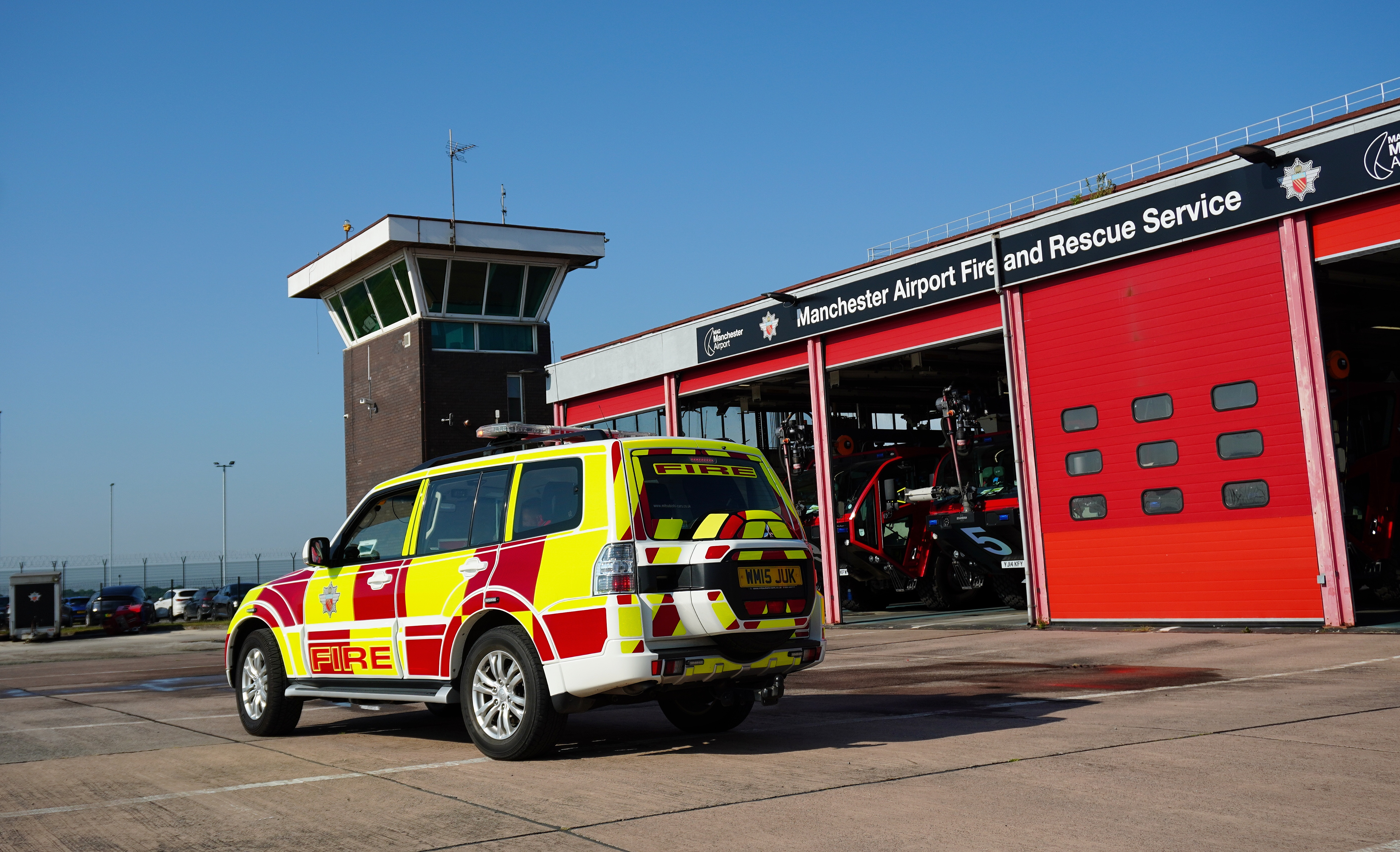
At the North Station, there's a considerable fleet to inspect.
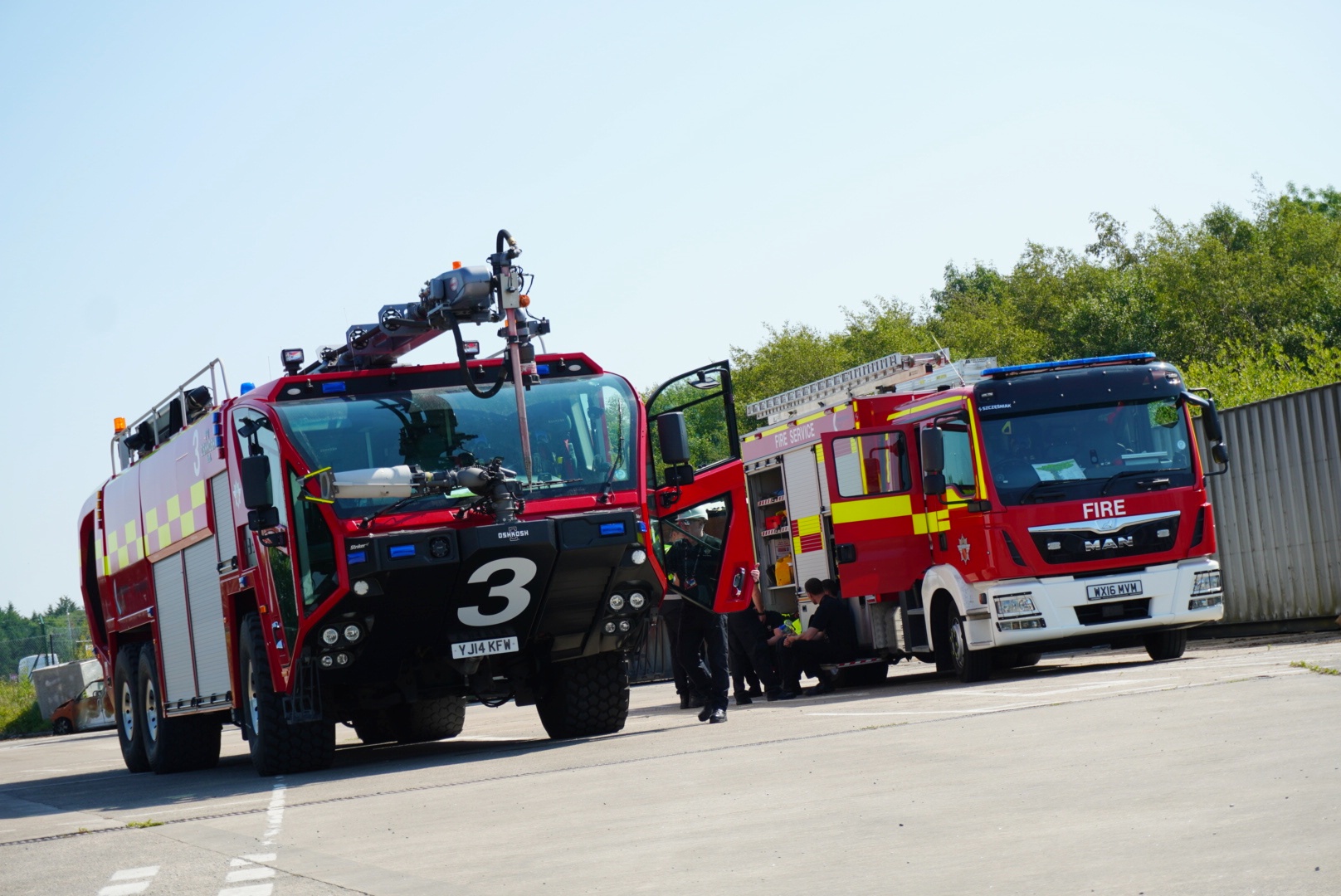
Four Oshkosh Striker aircraft rescue and firefighting vehicles are based at the North Fire Station, with a further two always ready for response from the South Fire Station. They're joined by a conventional domestic pumping appliance, a domestic support vehicle carrying additional equipment and medical intervention kit, and the duty station manager's command vehicle.
Each firefighter is responsible for checking their allocated vehicle and its equipment. Compartments are opened, equipment inspected, breathing apparatus tested and vehicle systems checked to ensure everything is ready for immediate use.
At an airport where crews may have only seconds to respond, there's little room for uncertainty.
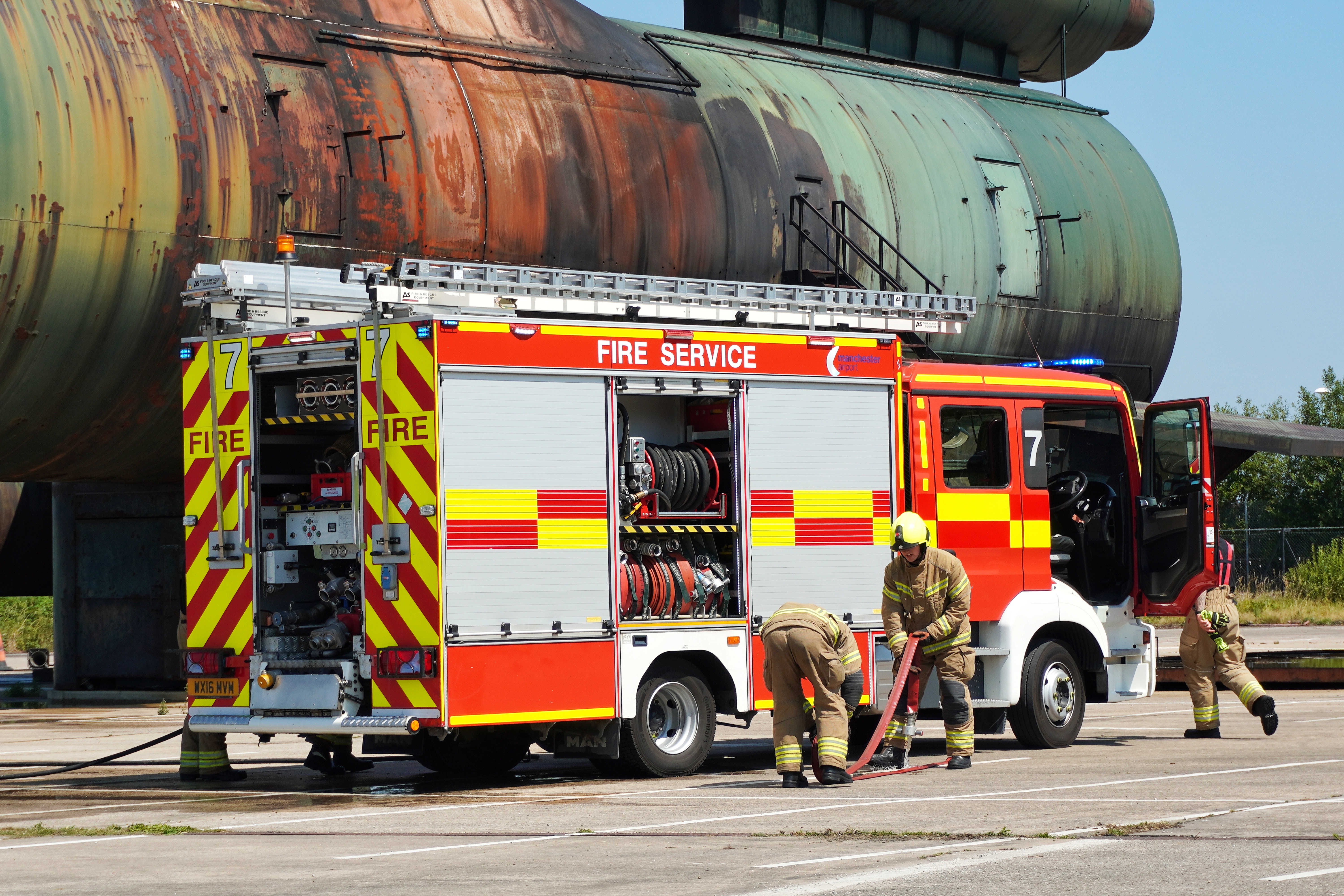
The presence of a conventional domestic pumping appliance is particularly notable. To most firefighters, it looks much more familiar than an airport crash tender — it carries much of the same equipment found on appliances responding from local authority fire stations across the country.
Its presence reflects the range of incidents Manchester Airport Fire & Rescue Service actually attends. Not every emergency involves an aircraft.
Manchester Airport contains terminals, hotels, offices, workshops, roads, car parks, hangars and numerous other buildings alongside its aviation infrastructure. The domestic appliance gives crews the flexibility to deal with building fires, automatic fire alarms, road traffic collisions and other emergencies across the wider airport estate.
As a major piece of national infrastructure, keeping the airport operating is important. Having an operational fire and rescue service permanently based on site means crews can often reach incidents elsewhere on the estate extremely quickly.
Maintaining this fleet also relies on dedicated support functions working behind the scenes. Manchester Airport Fire & Rescue Service has its own Vehicle Engineer, responsible for keeping appliances, equipment and operational readiness at the standard the airport demands. Having initially trained as an aviation firefighter, he has since upskilled to provide additional resilience within MARFFS, giving the service a limited capability to manage short-term unplanned crewing gaps and support operational cover when required — a flexible and forward-thinking approach that strengthens the watch beyond its frontline crews.
Heading Airside
Following the morning checks, Green Watch prepared to head across to the airport's fire training ground for the combination drill discussed during the briefing.
This is where one of the more unusual realities of being an airport firefighter becomes apparent — travelling between parts of your own workplace can mean passing through airport security.
Before any appliance enters the airfield, a mobile security team carries out the necessary checks. It's something firefighters working in most other environments will rarely have to consider, but at Manchester it's simply another part of the working day.
Combination Drill
Once at the training ground, everybody is checked in before the exercise begins, followed by a thorough safety briefing.
With temperatures approaching 30°C during our visit, heat was one of the biggest considerations of the day. Hydration, exposure and the welfare of crews undertaking physical activity in firefighting PPE were all part of the briefing before training began.
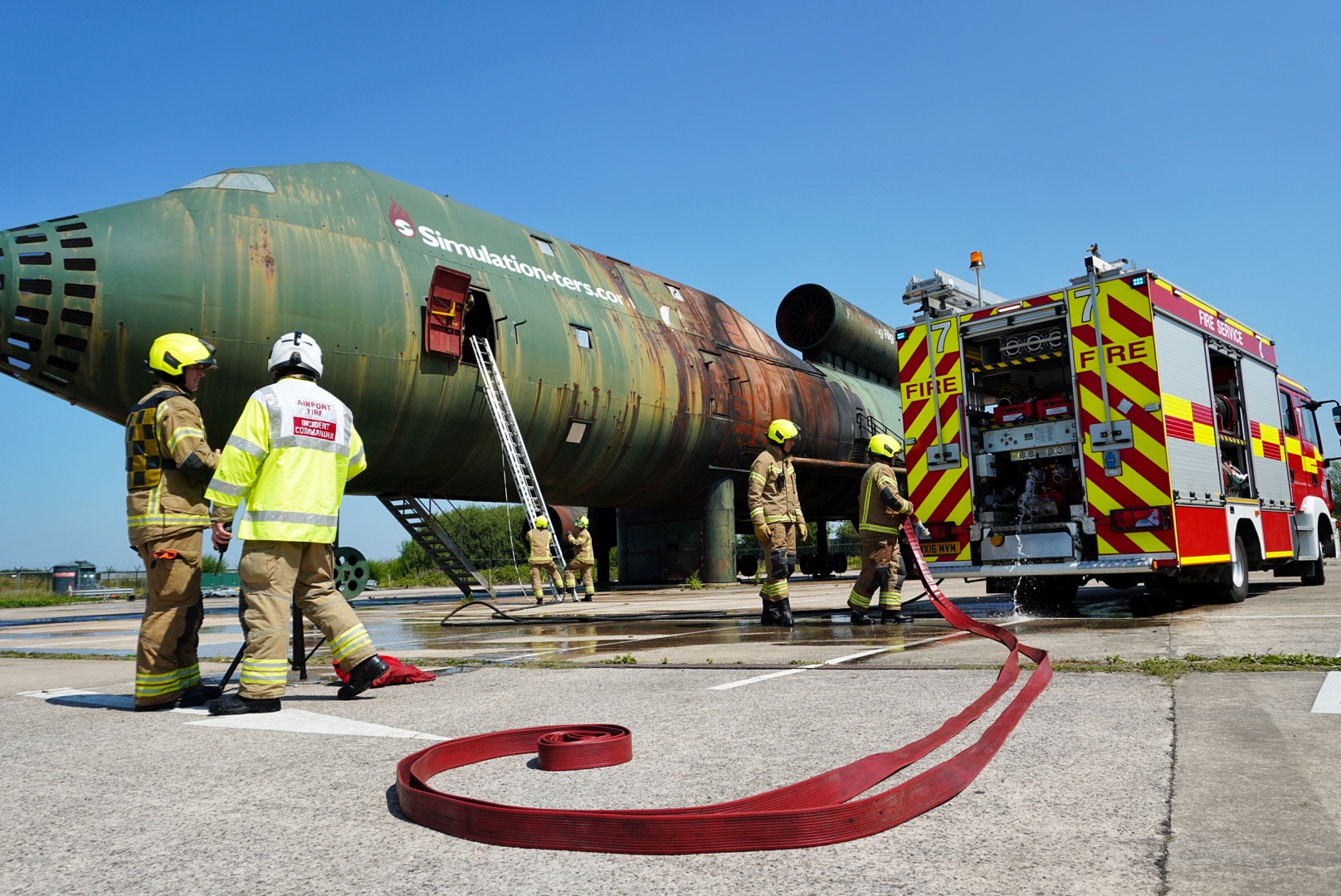
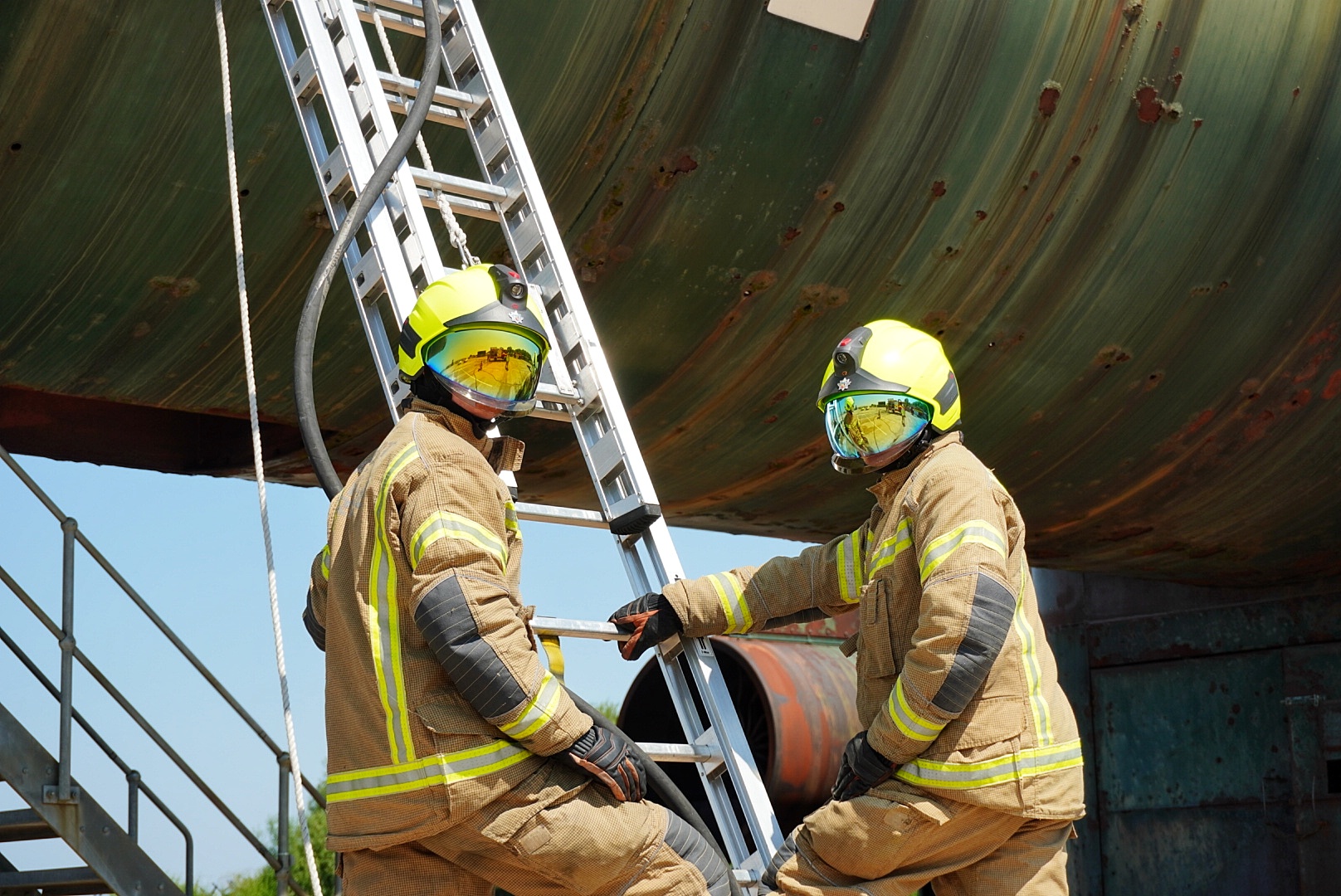
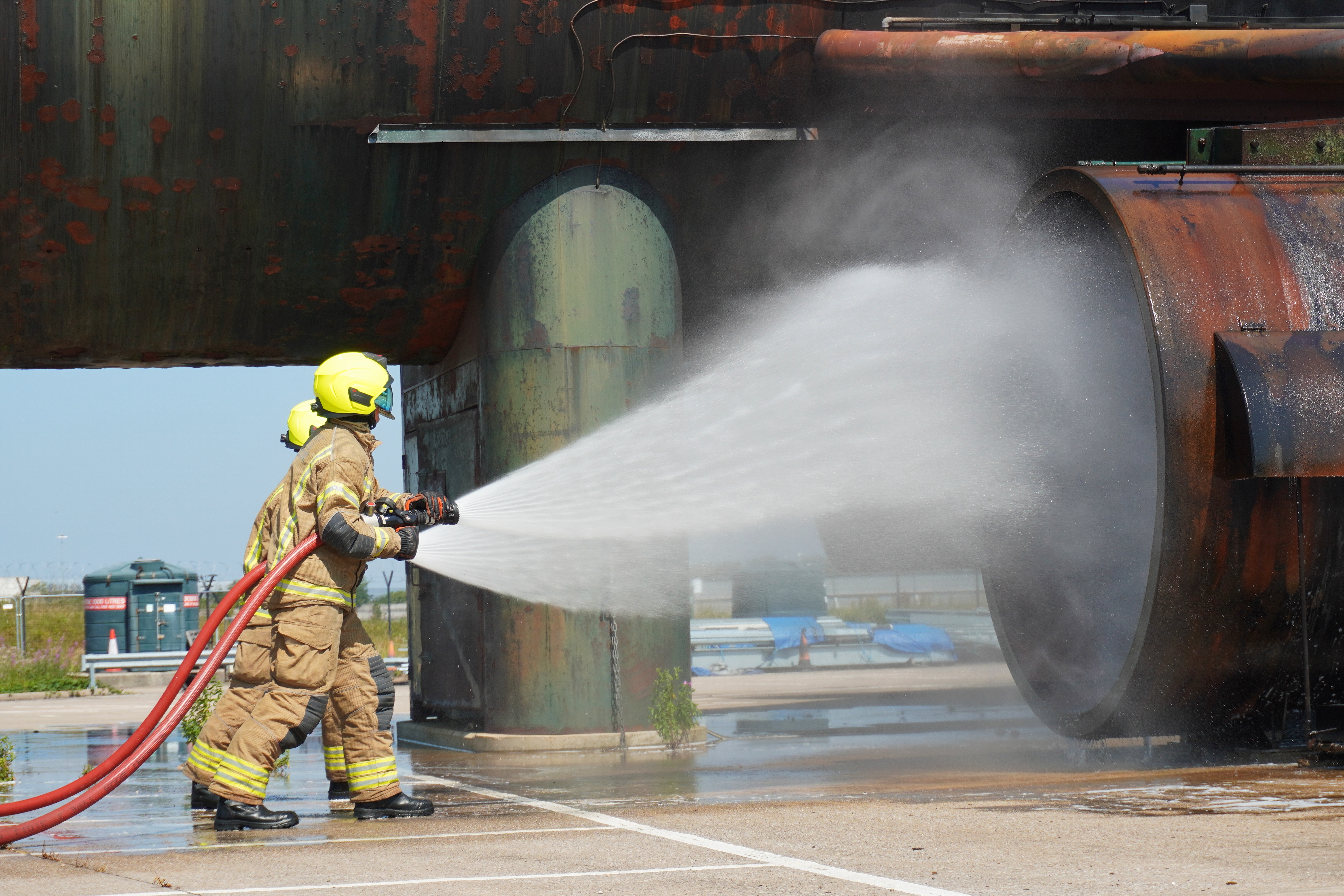
Green Watch then carried out a combination drill covering pumps, ladders, knots and lines.
For all the specialist equipment and unique risks associated with airport firefighting, much of what followed would have looked very familiar to firefighters anywhere in the UK. Ladders were pitched, pumps operated and fundamental firefighting skills practised.
It was an important reminder that beneath the aviation specialism, airport firefighters still rely on many of the same core competencies as their local authority counterparts.
Aircraft rescue and firefighting may be the defining role of an airport fire service, but firefighters still need to remain competent across the wider range of incidents they may encounter.
Following the exercise, crews returned to the North Fire Station.
Life on the Watch
Back at station, it was time for lunch. The watch's meal was prepared by the mess manager and the crews sat down together.
For anybody familiar with watch-based fire service culture, this part of the day will need little explanation. Eating together remains a significant part of life on station.
There was plenty of humour around the table and, despite the unusual environment outside, it felt immediately familiar. The appliances may be different and the risks may be different, but the watch culture is unmistakably fire service.
Shared meals, conversation and humour all contribute to the relationships between firefighters who may eventually have to rely heavily on one another during an emergency.
Lunch, however, didn't mark the beginning of a quiet afternoon. Almost immediately afterwards, Green Watch were back into training.
Into the BA Chamber
The next exercise took place in the dedicated breathing apparatus training facility within the drill yard at the main fire station — and this was one of the more unusual BA chambers we've visited.
Rather than being a permanently fixed layout, the internal environment can be changed. Walls can be moved, obstacles installed and additional hazards introduced, allowing instructors to alter the chamber and prevent crews simply learning a familiar route through the building.
The exercise was also designed as more than simply a crawl through a BA chamber. The scenario began from the station. Green Watch were mobilised on the domestic pumping appliance as though they were responding to a genuine incident. The crew boarded the appliance, responded into the drill yard and then carried out the process of preparing for an operational breathing apparatus deployment.
BA wearers rigged, the incident developed and the team went to work. Inside the chamber were two full-sized adult casualty dummies. The firefighters were required to search the compartment, locate both casualties and carry out their rescues.
The changeable layout of the facility means firefighters can't simply rely on memory. Search techniques, communication and teamwork remain important throughout.
It also demonstrates another key aspect of airport firefighting. While aviation emergencies naturally attract much of the attention, Manchester Airport Fire & Rescue Service must still maintain the core structural firefighting and breathing apparatus skills required to deal with incidents throughout the airport estate.
Once the exercise was complete, there was no simply walking away from the equipment. BA sets were serviced, cylinders changed and the equipment returned to the appliance. Within a short period, everything was back on the run and ready to be deployed operationally again.
Training may be taking place, but the fire service remains available throughout.
The Watch Room
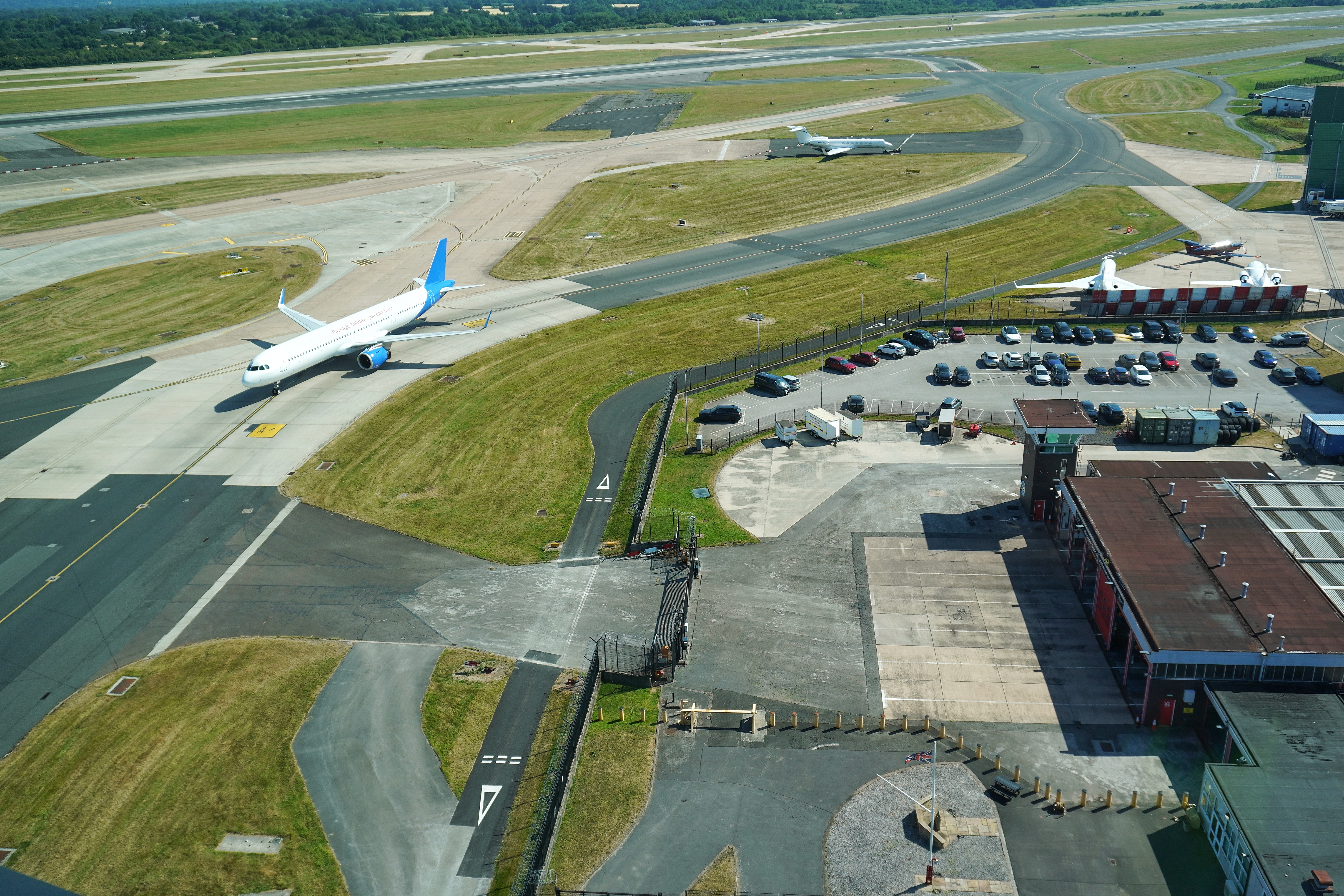
Our final stop of the day took us upstairs, to the Watch Room positioned below the Air Traffic Control tower — where emergency calls are received and the airport fire service response begins.
The desk is crewed 24 hours a day by a dedicated duty firefighter. From here, incidents are received, the appropriate crews and appliances are dispatched and the daily station logbook is maintained.
It's effectively the operational link between an incident developing somewhere across the airport and the firefighters waiting to respond. Depending on the information received, resources can then be mobilised accordingly.
Standing in the Watch Room provides perhaps the clearest reminder of the scale of responsibility carried by the crews. Outside, aircraft continue to taxi, arrive and depart. Thousands of passengers move through the terminals and normal airport life continues.
Inside, somebody is always watching and listening.
As the operational hub for mobilisation, communications and situational awareness, the Watch Room Firefighter is a key component of the airport's emergency response capability. It's a role that can, at times, be extremely challenging, requiring calm, clear decision-making while managing multiple demands at once.
More Than Crash Tenders
It's easy to look at an airport fire service and focus entirely on the impressive crash tenders. They're undoubtedly a major part of the capability.
But spending a full day with Green Watch demonstrated that airport firefighting is considerably broader than that.
The watch checks breathing apparatus, operates conventional pumping appliances, trains with ladders, practises knots and lines, carries out casualty searches and maintains structural firefighting skills. Crews also operate within an environment governed by aviation security, aircraft movements and extremely demanding response requirements.
It creates an unusual combination. There are moments where life at Manchester Airport Fire & Rescue Service feels completely different from a local authority station. But there are just as many moments where it feels instantly familiar. The morning appliance checks. The BA drills. The ladders. The mess table. And perhaps most importantly, the humour and camaraderie between the firefighters.
Medical response is another significant part of the role. Alongside aircraft and fire incidents, crews provide emergency medical support across the airport estate, working closely with the North West Ambulance Service and, when needed, supporting NWAS in return. It's a responsibility that sits alongside the more visible firefighting duties, but one that forms a regular part of watch life.
Keeping Manchester Moving
For the vast majority of passengers travelling through Manchester Airport, the fire and rescue service will remain largely unseen. And that's probably the way everybody would prefer it.
But behind the terminal buildings, Green Watch and their colleagues are constantly preparing. Vehicles are checked. Equipment is tested. Crews train. BA sets are serviced. Information is passed between watches. And the Watch Room remains staffed around the clock.
The serious incidents these firefighters prepare for may be rare, but preparation cannot be.
As our day with Green Watch came to an end, aircraft were still arriving and departing just a short distance from the station. For the passengers on board, it was simply another normal day at Manchester Airport.
For the firefighters responsible for protecting it, keeping it normal is the job.





Comments
No comments yet — be the first!