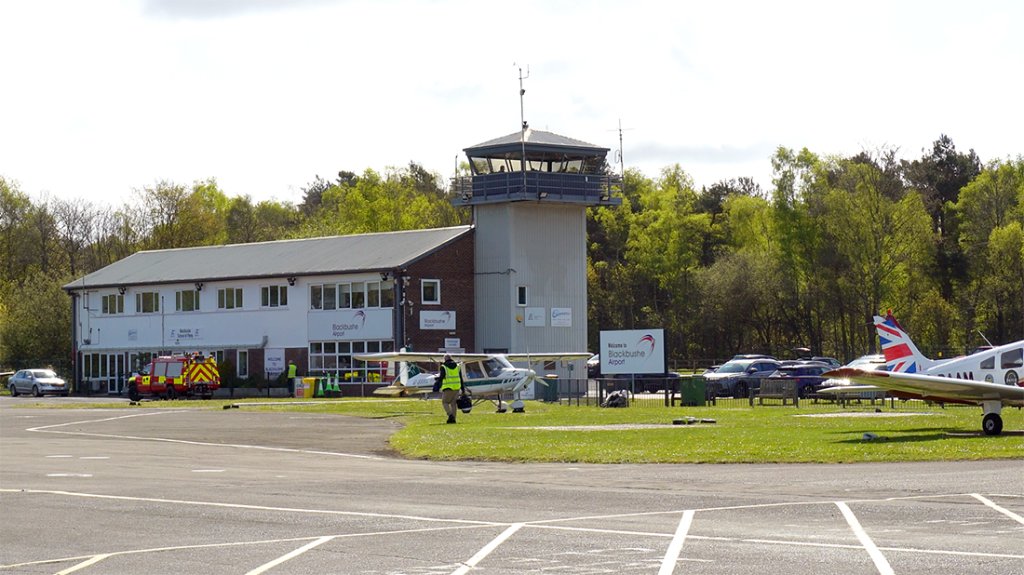
In April, the UK Firefighter Hub went behind the scenes at Blackbushe Airport to understand what it really means to be a firefighter at a low category aerodrome.
At first glance, Blackbushe almost feels calm.
There are no packed terminals or holidaymakers rushing for departures. Instead, there's a steady rhythm of private pilots, business jets, and light aircraft. Quiet, controlled, almost understated.
But behind the station doors, it's a very different picture.
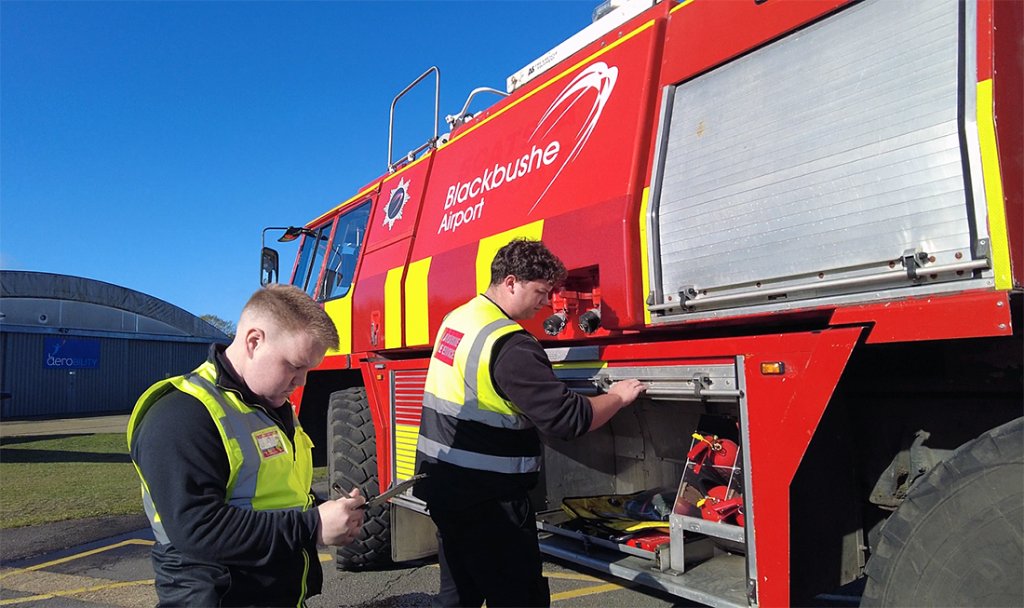
From the moment we arrived, the watch were already at work. Appliances were being checked, equipment cross-referenced and accounted for and breathing apparatus sets tested and inspected. It's not rushed. It doesn't need to be.
Here, readiness isn't reactive — it's constant.
Blackbushe sits right on the Hampshire–Surrey border, just off the busy A30. It's classed as a low category aerodrome, meaning fewer aircraft movements and generally smaller aircraft. But that classification can be misleading.
The expectation on the fire and rescue service here is exactly the same as any large international airport.
When something goes wrong on an airfield, it goes wrong fast... and that's reflected in how this team operates.
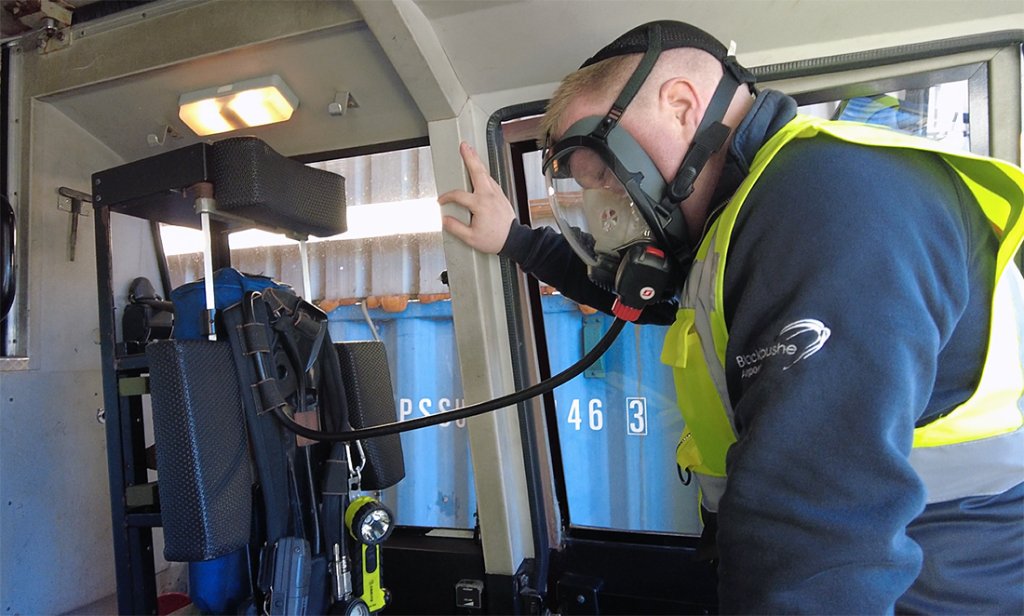
One thing that immediately stands out here is their use of breathing apparatus. At many aerodromes of this size, BA isn't standard. At Blackbushe, it is.
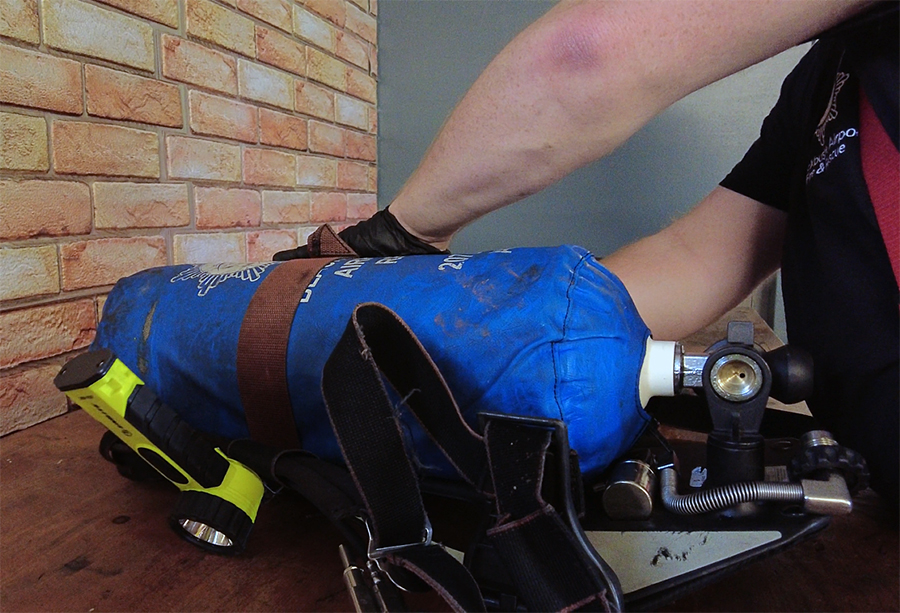
They run their own BA sets, supported by an on-site compressor and servicing capability. It's a clear commitment — not just to firefighting capability, but to firefighter safety, particularly around contaminants.
It's not an add-on here. It's embedded in the culture.
More Than Just Firefighters
As the morning develops, we head out onto the runway with Senior Airport Fire Officer Rob Paull.
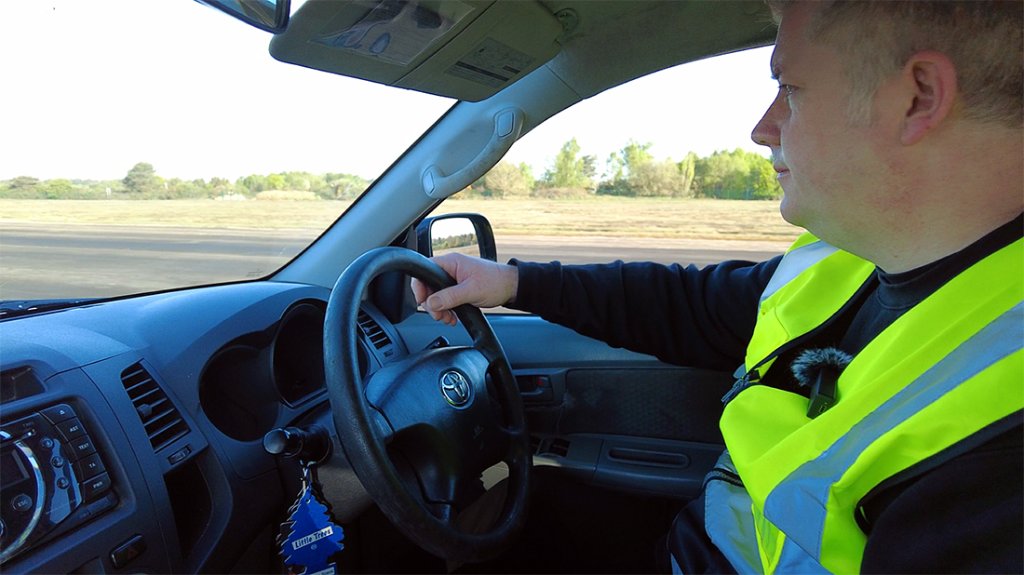
With nearly 30 years in the county fire service, and two decades at Blackbushe, Rob knows this airfield inside out. Today, he's driving Fire 3, a Toyota Hilux used for operational duties across the site.
Runway inspections might not sound dramatic, but they're critical.
Foreign Object Debris (FOD) is a constant threat in aviation. Something as small as a loose bolt or fragment of debris can be ingested into an engine with serious consequences.
As we move along Runway 07, Rob suddenly slows.
He's spotted something — barely visible against the tarmac.
Within seconds, he's out of the vehicle, removing it, and back on the move. A quick radio update to Air Traffic Control, and the runway is confirmed clear.
Simple. Efficient. No fuss.
But... it highlights the reality of the role — attention to detail can be the difference between routine and incident.
A Role Built on Variety
Back on the apron, Firefighter Callum Baldwin is preparing to refuel an aircraft.
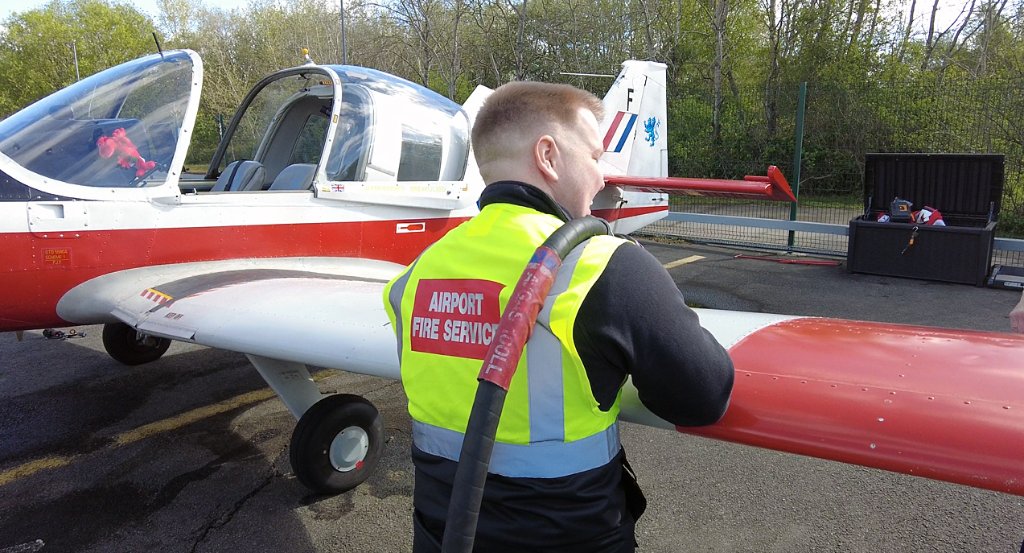
Before any fuel flows, he connects an earth line between the aircraft and the bowser — a small but vital step to prevent static discharge that could ignite fuel vapours.
It's another reminder that this job isn't just about firefighting.
Callum talks about the variety the role brings. On any given shift, firefighters here could be:
- Conducting runway inspections
- Carrying out wildlife control
- Refuelling aircraft
- Marshalling incoming flights
- Supporting wider airfield operations
It's a true multi-role environment.
But there's one constant.
No matter what task they're doing — they're always listening for the crash alarm.
When the Alarm Sounds
Later in the day, we see exactly what that looks like.
A no-notice fire drill is set up on the mock King Air aircraft training rig.
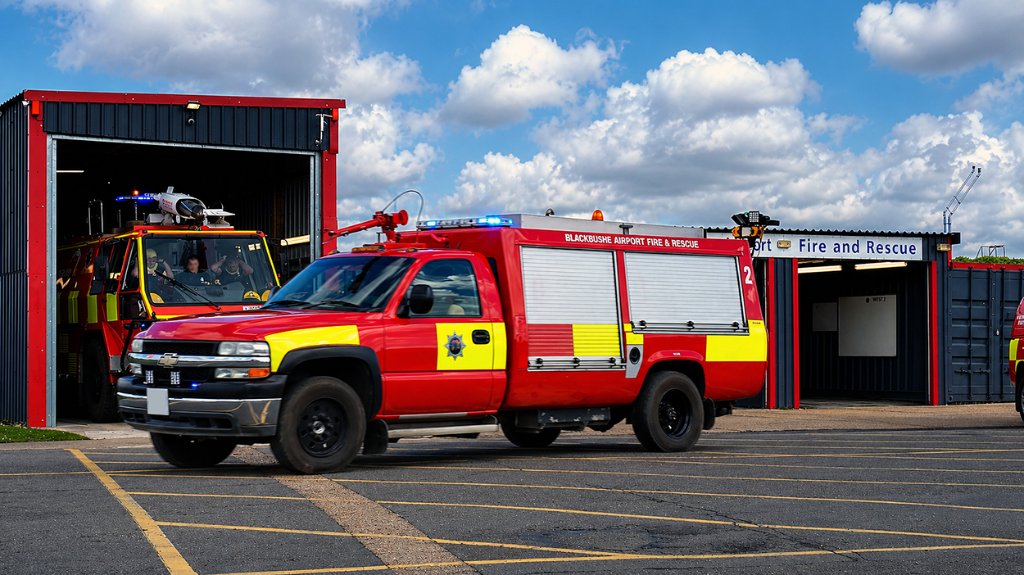
When the crash alarm sounds, the change is immediate.
Firefighters move with purpose. Personal Protective Clothing & BA Sets are donned. Appliances are moving out the bays within seconds.
In aviation firefighting, time is everything.
Crews are expected to reach any point on the airfield within two minutes — three at the absolute maximum.
As the appliances arrive, the operation is controlled, rehearsed and decisive.
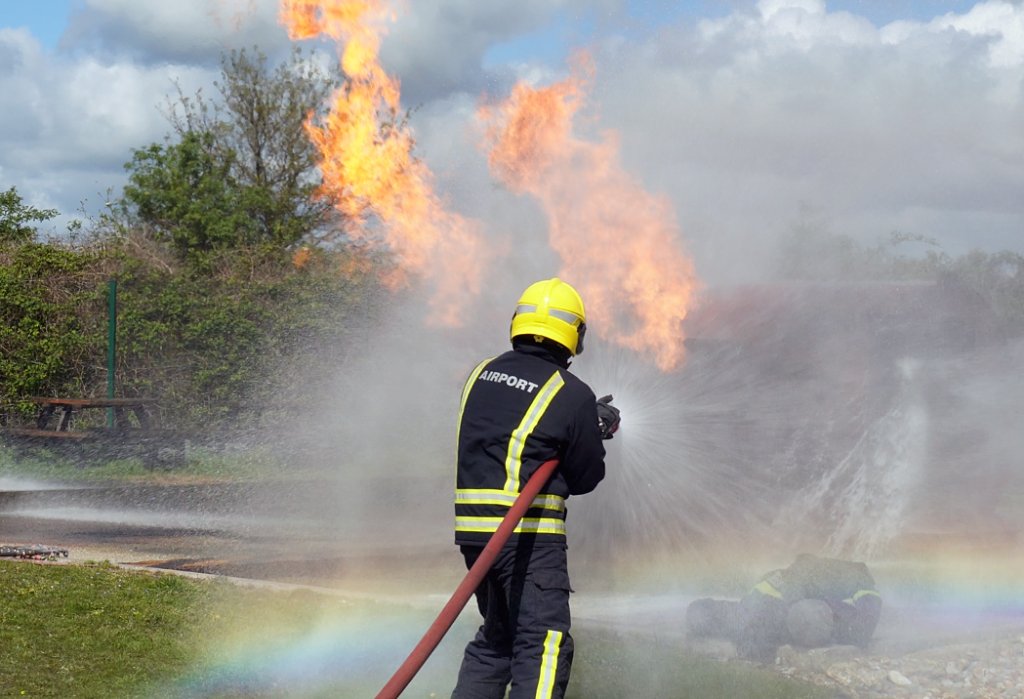
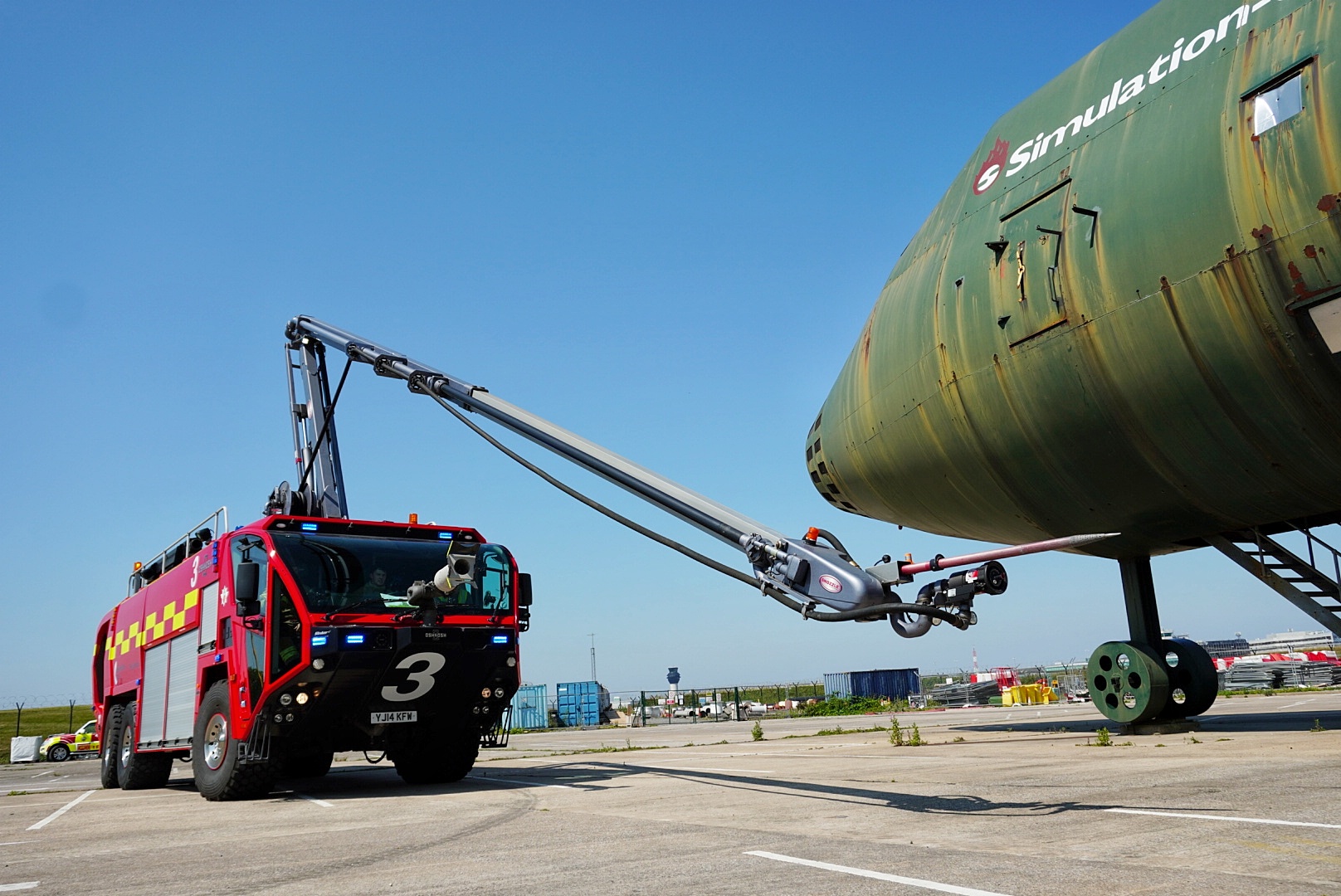
Fire 2 positions up, its roof monitor immediately delivering water to cool the fuselage. On the ground, a 45mm hose line is deployed to tackle fire around the engine and undercarriage.
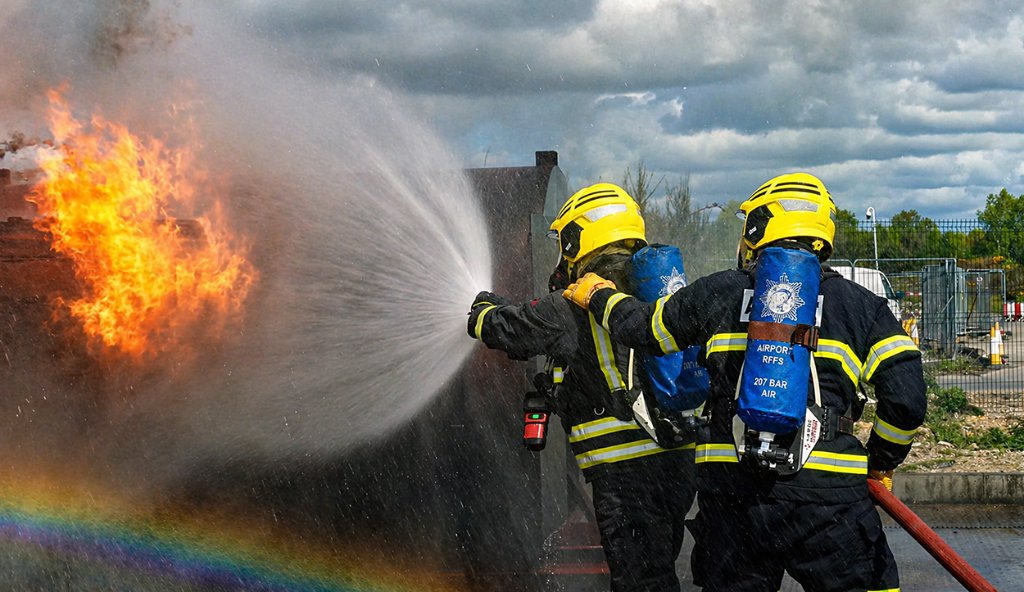
BA crews prepare to commit, tallies are entered into the BA board. Buddy checks are completed quickly but thoroughly.
Even in a training environment, the intensity is real. The movements are practiced, the communication sharp, the structure clear.
This is a team that knows exactly what's expected — and delivers it.
Contamination Matters
One of the most impressive elements of the day isn't just the firefighting — it's what happens after.
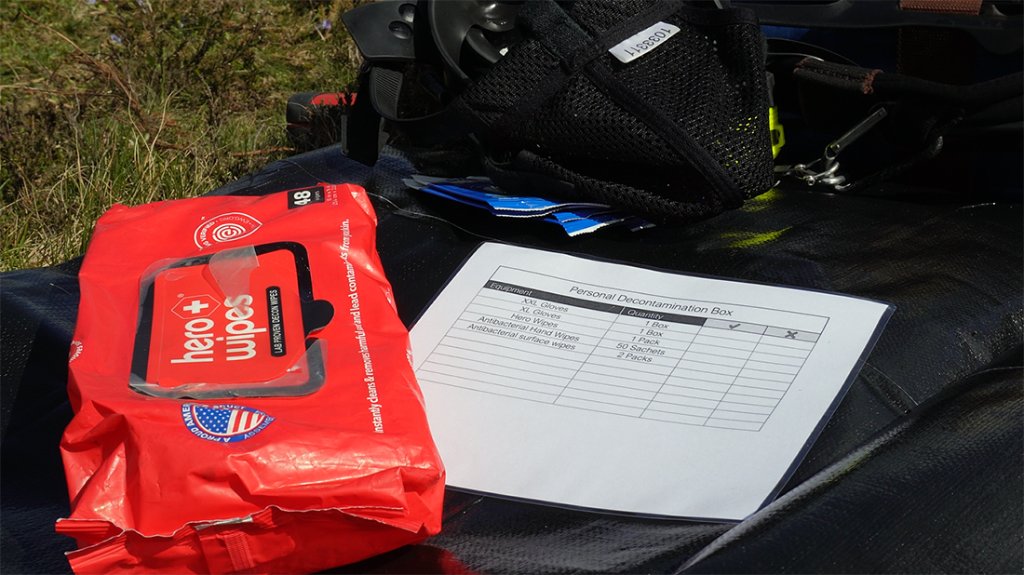
Post fire contamination control is taken seriously.
Firefighters remain under air while removing BA and PPE, reducing exposure during this high-risk phase. Equipment is handled carefully — ventilated, cleaned, or bagged depending on its condition.
Back at station; face masks are submerged, flashhoods are laundered and showers are used immediately.
It's clear this isn't a tick-box exercise, but a mindset.
As Rob explains, reducing exposure to harmful contaminants is just as important as dealing with the incident itself.
Small in Name Only
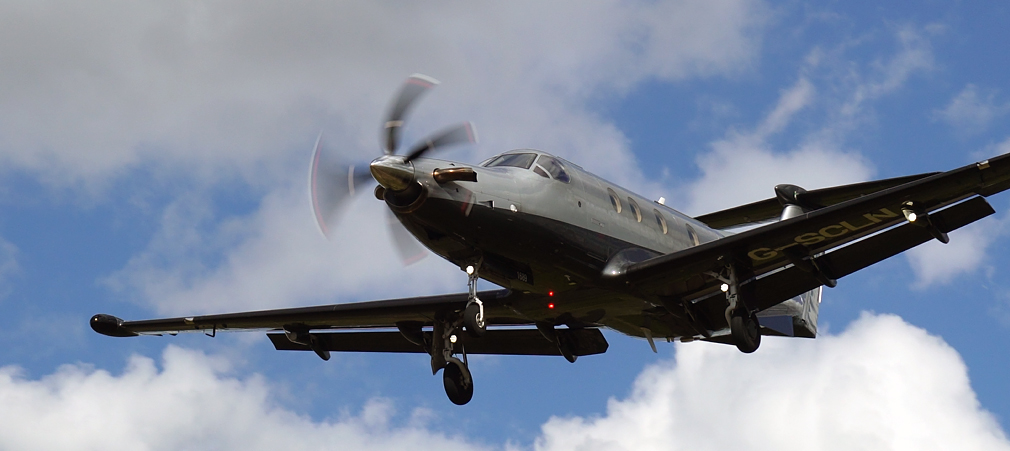
By the end of the day, Blackbushe returns to its calm, steady rhythm.
Aircraft continue to arrive and depart. The runway stretches out quietly into the distance.
Driving past, it would be easy to underestimate this place.
But that would be missing the point.
Because while Blackbushe may be classed as a low category aerodrome, the responsibility carried by its fire and rescue team is anything but.
This is a role that demands versatility, precision, and constant readiness. Because when the alarm sounds, there are no second chances. Only the expectation to respond — and to get it right.
To explore more behind-the-scenes features, operational insights, and firefighter-focused content, join the UK Firefighter Hub — with you every step of the way.


Comments (1)
This is a real decent, well prepared low category firefighting unit. I am looking forward to seeing the expansion take place, these guys deserve much more praise for the work they do!